Dr. Sudheera Manorama Wadisinha Ranwala
Presidential Address
Presented at 2009 Annual Sessions of the Institute of Biology, Sri Lanka
Biological invasions, one of the important components of the process of global changes, occur when organisms are introduced to new, often distant ranges where their descendants proliferate, spread and persist. Invasions are neither novel nor a human-driven phenomenon, but it has been shown that the number of biotic invasions have grown enormously as a direct consequence of expanding travel, trade and tourism in the past 200 years and especially in the last 50 yrs.
According to Williamson’s “Tens Rule”, less than 1% of species that are introduced into a new environment will become damaging pests, or cause adverse effects on biodiversity. However, the ones that do become invasive will be responsible for serious economic and environmental costs as they act on ecosystem, community and population levels wherever they invade. They could adversely affect ecosystems by dramatically altering the ecosystem functions in a multitude of ways. They do bring about alterations in light availability, nutrient cycling pattern and energy budgets, hydrological regimes, rates of sedimentation, soil erosion and intensity of wild fires. Invasions by disease-causing organisms can severely impact native species. These effects may indirectly contribute to the abundance or survival of native species including endemic and threatened species. Cumulative impacts of alien invaders on community structure and composition are immense, irreversible and irreparable. They are responsible for elimination, reduction of the number of native species in the community leading to extinctions. It is said that the estimated 80% of endangered species in the world suffer by predation by or competition with alien invaders. These changes pose a threat to global biodiversity second in impact to habitat loss and fragmentation.
Biotic invasions cause two main categories of economic impacts, through production loss in agriculture, forestry and losses that occur through recreational and tourism revenues and costs directly related to combating alien invaders including all forms of quarantine, control, and eradication. If monetary values could be assigned to the extinction of species and loss of ecosystem services, total costs from impacts of biological invasions would drastically increase. Thus, consequences of biotic invasions are often so profound and therefore new invasions should be prevented. Establishment and the spread of biological invasions should also be managed.
Strategic approaches for management of invasive alien species encompass prevention, early detection, eradication, control and containment. Screening of biological imports at the country boundaries is considered as the most cost- effective means of prevention of the arrival of pests and infectious diseases to new environments. The ability of a nation to restrict the movement of biotic invaders across its borders is governed by international treaties, key among them being the International Plant Protection Convention (IPPC) agreement that had developed International Standards on Phytosanitary Measures (ISPM) in collaboration with the Secretariat of the of the Food and Agriculture Organization (FAO) and the Secretariat of the Convention on Biological Diversity. Under this agreement, member countries including Sri Lanka can restrict movement of species that may pose threats to human, animal or plant life. Other international agreements such as World Trade Organization (WTO), South Asian Association for Regional Cooperation (SAARC) Preferential Trading Agreement (SAPTA), Convention on Biological Diversity (CBD), International Convention for the Prevention of Pollution From Ships, 1973 as modified by the Protocol of 1978 MARPOL (73/78) and International des Epizooties (OIE) have also established various standards and guidelines to be used for international trade of biological organisms and their products in order to protect human, plant and animal life.
Sri Lanka has enacted several national legislation which either directly or indirectly address the prevention of introduction and control of spread of biological invasions in Sri Lanka. Water Hyacinth Ordinance of 1909 is the first legislation implemented with regard to alien plant invaders in Sri Lanka. The Fauna and Flora Protection Ordinance, No 02 of 1937 as amended, Plant Protection Act no 35 of 1999 and the Seed Act no 22 of 2003 also make provisions for the sanitation of plants and regulate the introduction and spread of organisms harmful to existing flora of the country. The Animal Diseases Act No 59 of 1992 ensures that exotic diseases are not introduced to Sri Lanka. The amendments made to section 61 read with section 30 of the Fisheries and Aquatic Resources Act no 2 of 1996 provide restriction on import and export of certain fish species which are harmful to aquatic fauna. At present, implementation of these agreements and legislation does not totally provide effective control against introduction of potential invaders due to various limitations.
Being a member country of Convention on Biological Diversity, the government Sri Lanka has taken steps to conserve its exceptional biological wealth from the time of signing the convention in 1992. It includes all efforts that were conducted, being conducted or to be conducted in accordance with article 8 (h) of the convention which indicate that all possible mechanisms should be considered to prevent the introduction, control spread and management of invasive alien species that threaten habitat and ecosystems. The Ministry of Environment and Natural Resources as the national focal point to the CBD together with other line -departments have already developed policies, many projects and programmes to prevent the introduction, control and eradicate invasive alien species (IAS) in Sri Lanka. In addition, organization of the first national symposium on IAS in Sri Lanka by the Ministry of Environment in 1999 and three other symposia in collaboration with National Agricultural Society (in 2000), National Science Foundation and Sri Lanka Association for the Advancement of Science/ Section D (in 2008), Agriculture Extension Unit, University of Peradeniya and Institute of Biology (in 2009), strengthened the interdisciplinary corporation among various key stakeholders. These symposia also served as a venue for upgrade and exchange of knowledge among scientists and policy makers, identified gaps and loopholes and raised public awareness on the current status of biological invasions in Sri Lanka. The project on control and management of freshwater aquatic invasive alien species in Sri Lanka conducted by the Ministry of Environment with technical assistance from the Food and Agricultural Organization and Plant Protection services of the Department of Agriculture performed several activities related to the introduction of biocontrol agents for the two most serious aquatic weeds, Salvinia molesta and Eichhornia crassipes, survey of aquatic weeds in Kurunegala and Anuradhapura Districts and several awareness, training and capacity building programmes for the rural community in these regions. A draft policy on controlling invasive alien species in protected areas had also been prepared in 2005 under the Protected Area Management Project of the Department of Wildlife Conservation, Sri Lanka. The country is now stepping towards a five year project for strengthening capacity to control the introduction and spread of invasive alien species in Sri Lanka through the Global Environmental Facility and United Nations Development Programme. This has already planned the work ahead including revision of national lists of Invasive alien Fauna and Flora, revision of legal regimes, establishment of demonstration sites for effective management, analysis of economic impacts, costs and benefits of IAS, development of an Information Management System, establishment of protocols for screening of live imports of plants and animals to Sri Lanka, development of programmes to improve communication, education, training and capacity building for IAS control, enhancement of institutional coordination, policy preparation and monitoring etc, so as to fill the existing gaps that exist with regard to combating biological invasions in Sri Lanka. Department of Agriculture, the focal point to the International agreement on Plant Protection (IPPC) through various programmes significantly contributes to prevent introduction, control and eradicate species that interfere with the agro-biodiversity of the country. The Marine Environment Protection Authority (MEPA), which acts as the focal point for implementation of the MARPOL convention 73/78 has also taken steps forward to manage marine invasive species. Other government agencies such as the Department of Wildlife Conservation, Forest Department, Irrigation Department, Mahaweli Authority of Sri Lanka, National Aquatic Resources and Research Agency, Department of National Botanic Gardens, Central Environmental Authority, Universities and Research Institutes have also contributed in numerous ways for management of IAS in Sri Lanka. The Non governmental organizations such as the World Conservation Union (IUCN), Sri Lanka Nature Forum (SLNF), EML consultants (Pvt) Ltd, Eco –V, Sewalanka Foundation and several other NGOs together with various community based organizations play a key role in working towards management of alien invaders in Sri Lanka.
Prediction of invasiveness of species during import, identification of the most threatening species and the most vulnerable communities for effective control of already established IAS are not simple. The extent of spread that would be subjected for management, most effective method of control, available resources, post removal treatment for biomass, tools for monitoring of regeneration and assessment of benefits resulting from management are crucial steps in control and management of IAS. Education and awareness on invasive species is strictly necessary for vigilant early detection of IAS by the society for easy control and management. Finding uses of IAS seems attractive, particularly in the tropics where low cost and labour intensive small scale technologies are feasible, but is a challenging issue. However, a variety of possible uses including composting, paper pulping, biogas production, utilization of chemical properties etc., have been innovated by Sri Lankans for controlling some invasive alien plants, but such management measures for invasive alien fauna is still remain unexplored.
It is well understood that much of the world’s attention has been paid more to invasive alien flora than invasive alien fauna with reference to many aspects. Recent surveys on published information on invasive alien species of Sri Lanka had revealed that very limited aspects of IAS have been investigated during the past few years and many windows of opportunities exist for IAS work. Over the years, a few species were popular examples. Most of the publications were focused on terrestrial species although aquatic species were the most problematic group. Ecological impacts, control and management aspects of invasive alien species have been fairly addressed by several authors while studies that focus on economic impacts, costs and benefits of invasive species in Sri Lanka are scanty. Biological aspects such as genetics, reproductive biology, regeneration and propagation studies, assessment of distribution, spread, degree of invasiveness, allelopathic effects of plants, feeding and nesting habits of animals and their habitat characteristics have been paid little attention. Legal aspects and assessments on the public awareness status of IAS have been untouched. Identifying future invaders and predicting their likely sites of invasion are of immense scientific and practical interest. In practical terms, it could reveal the most effective means to prevent future invasions. Economic benefits from "alien invaders" should also be given priority in research. Horticulture is a key pathway for introduction of species to national borders as many of our invasive species have been introduced for ornamental use. Despite the fact that only few exotics will become invasive, disallowing the use of existing invasive species for horticultural purposes while encouraging the use of alternative native species, would provide a stronger foundation in preventing the introduction of potential alien invasive species to the country.
We, as biologists, are in a position to address all these issues and find effective solutions through scientific research, provide accurate documentation and evaluations for steps to be taken in the right direction. No matter we are physiologists, molecular biologists, taxonomists, ecologists, conservationists, GIS specialists, collaborative efforts among us would result in a significant improvement in combating biological invasions in this small island. Foremost among the responsibilities of us, as the biologists in this country, is to ensure that biological wealth is protected and being utilized in a sustainable manner. Being one of the largest group of biologists in Sri Lanka, the Institute of Biology is also in a suitable position to sensitize other societies and clubs to the issues regarding alien invaders, to work with industrialists to assist the public in safe gardening and landscaping of the environment, partner with local governmental and non governmental organizations and international agencies in the management of harmful alien invaders.
Let’s get together to combat biological invasions!
Showing posts with label annual sessions. Show all posts
Showing posts with label annual sessions. Show all posts
Thursday, November 19, 2009


Dr. Magdon Jayasuriya
Felicitation Address presented by Prof. Hemanthi Ranasinghe Department of Forestry and Environmental Science, University of Sri Jayewardenepura at Institue of Biology Annual Sessions, September 2009
It is my great pleasure to have this opportunity of presenting to this distinguished membership of the Institute of Biology, Dr. Magdon Jayasuriya, whom the Institute will be felicitating today in recognition of his invaluable services rendered to the field of biology.
He was already a giant in the field of biology when I entered the field after my postgraduate studies. However, he was always happy to extend a helping hand to younger scientists.
Dr. Jayasuriya graduated from the University of Colombo in 1969 with a Botany Special Degree. He joined the University of Colombo as a Demonstrator soon after graduation and then was recruited as a Graduate Research Assistant and later promoted to Collaborator in the Flora of Ceylon Project by the Smithsonian Institute in Washington D.C. From 1977 to 1996 he worked in the Department of Agriculture, Peradeniya as a Systematic Botanist and Curator of the National Herbarium. During this time he obtained a M. Phil Degree in Plant Ecology and Plant Systematics from the University of Peradeniya in 1981 and PhD in Plant Systematics from the City University of New York, USA in 1984.
He became the Director of the Plant Genetic Resources Centre of the Department of Agriculture in 1996 until 1998 when he became the Senior Deputy Director of Agriculture inn1998 until he retired in 2004. Since then he continues to provide his contribution to the field of Biology as the Advisor and Senior Consultant in the Environmental and Management Lanka (Pvt) Ltd, a private consulting firm engaged heavily in environmental and ecological assessments.
His contribution to the field of biology is immense and exceptional. He conducted research into the flora of Sri Lanka with special reference to systematics, ecology, economic botany, germplasm survey, natural products including medicinal plants and biodiversity conservation. His publication on the flora of Ritigala gave new insights to plant diversity in this unique location. He was the principal researcher on many national and international research projects in the area of biodiversity conservation. Sri Lanka USA Cooperative Germplasm Development, Third Country Training Programme in Plant Genetic Resources Conservation and Management, National Conservation Review Project conducted jointly by the IUCN, Forest Department and Ministry of Forestry and Environment, Preparation of a Portfolio of strategic conservation sites/Protected Area Gap Analysis are some larger projects in which Dr Jayasuriya performed a very significant role.
As the Director of the Plant Genetic Resources Centre and Senior Deputy Director of the Department of Agriculture he was instrumental in engaging international cooperation and collaboration in the conservation of plant genetic resources in the country.
He is extending his services towards biodiversity conservation in the country and internationally by serving in relevant committees. He represents the country in many international fora as an expert in biodiversity conservation, plant systematics and plant resources and agro biodiversity. He is a Fellow of the Linnean Society of London and a Member of the International Palm Society. He is a member of the International Steering Committee on In situ conservation of crop wild relatives through enhanced information management and field application effected by the International Plant Genetic Resources Institution from 2000-2004. He was a member in numerous national level committees dealing with biodiversity conservation with special reference to genetic resources conservation. Some of them are Species Survival Commission of IUCN, National Steering Committee on Conservation of Crop Wild Relatives of the Ministry of Environment and Natural Resources. He has many publications to his credit many in peer reviewed journals.
Dr Jayasuriya’s academic carrier portrays a giant academic stature through his simple and friendly personality. On behalf of the Institute of Biology I salute you sir as a true biologist in the country and wish you good health and fortune to continue your work for many more years to come.
It is my great pleasure to have this opportunity of presenting to this distinguished membership of the Institute of Biology, Dr. Magdon Jayasuriya, whom the Institute will be felicitating today in recognition of his invaluable services rendered to the field of biology.
He was already a giant in the field of biology when I entered the field after my postgraduate studies. However, he was always happy to extend a helping hand to younger scientists.
Dr. Jayasuriya graduated from the University of Colombo in 1969 with a Botany Special Degree. He joined the University of Colombo as a Demonstrator soon after graduation and then was recruited as a Graduate Research Assistant and later promoted to Collaborator in the Flora of Ceylon Project by the Smithsonian Institute in Washington D.C. From 1977 to 1996 he worked in the Department of Agriculture, Peradeniya as a Systematic Botanist and Curator of the National Herbarium. During this time he obtained a M. Phil Degree in Plant Ecology and Plant Systematics from the University of Peradeniya in 1981 and PhD in Plant Systematics from the City University of New York, USA in 1984.
He became the Director of the Plant Genetic Resources Centre of the Department of Agriculture in 1996 until 1998 when he became the Senior Deputy Director of Agriculture inn1998 until he retired in 2004. Since then he continues to provide his contribution to the field of Biology as the Advisor and Senior Consultant in the Environmental and Management Lanka (Pvt) Ltd, a private consulting firm engaged heavily in environmental and ecological assessments.
His contribution to the field of biology is immense and exceptional. He conducted research into the flora of Sri Lanka with special reference to systematics, ecology, economic botany, germplasm survey, natural products including medicinal plants and biodiversity conservation. His publication on the flora of Ritigala gave new insights to plant diversity in this unique location. He was the principal researcher on many national and international research projects in the area of biodiversity conservation. Sri Lanka USA Cooperative Germplasm Development, Third Country Training Programme in Plant Genetic Resources Conservation and Management, National Conservation Review Project conducted jointly by the IUCN, Forest Department and Ministry of Forestry and Environment, Preparation of a Portfolio of strategic conservation sites/Protected Area Gap Analysis are some larger projects in which Dr Jayasuriya performed a very significant role.
As the Director of the Plant Genetic Resources Centre and Senior Deputy Director of the Department of Agriculture he was instrumental in engaging international cooperation and collaboration in the conservation of plant genetic resources in the country.
He is extending his services towards biodiversity conservation in the country and internationally by serving in relevant committees. He represents the country in many international fora as an expert in biodiversity conservation, plant systematics and plant resources and agro biodiversity. He is a Fellow of the Linnean Society of London and a Member of the International Palm Society. He is a member of the International Steering Committee on In situ conservation of crop wild relatives through enhanced information management and field application effected by the International Plant Genetic Resources Institution from 2000-2004. He was a member in numerous national level committees dealing with biodiversity conservation with special reference to genetic resources conservation. Some of them are Species Survival Commission of IUCN, National Steering Committee on Conservation of Crop Wild Relatives of the Ministry of Environment and Natural Resources. He has many publications to his credit many in peer reviewed journals.
Dr Jayasuriya’s academic carrier portrays a giant academic stature through his simple and friendly personality. On behalf of the Institute of Biology I salute you sir as a true biologist in the country and wish you good health and fortune to continue your work for many more years to come.
Tuesday, September 22, 2009
Annual Sessions of Institute of Biology on 25 September 2009
29th Annual Sessions of Institute of Biology (Sri Lanka) will be held on 25th September 2009 at
SLAAS Auditorium, Vidya mawatha, Colombo 7 at 8.30 a.m.
Programme
8.30 a.m. Registration
8.55 a.m. Arrival of the Chief Guest
9.00 a.m. National Anthem & the lighting of the Traditional Oil Lamp
9.10 a.m. Welcome Address
9.15 a.m. Address by the President, Dr Sudheera.Ranwala
9.45 a.m. Address by the Chief Guest, Prof. Kshanika Hirimburegama, Vice Chancellor, University of Colombo
10.00 a.m. Felicitation ceremony for Dr. Magdon Jayasuriya
10.15 a.m. Award of Medals and Certificates for winners of the National Biology Olympiad 2009
10.35 a.m. Vote of Thanks
10.40 a.m. Refreshments
11.00 a.m. Annual General Meeting
12.00 p.m. Lunch
1.00 p.m. Technical Sessions
SLAAS Auditorium, Vidya mawatha, Colombo 7 at 8.30 a.m.
Programme
8.30 a.m. Registration
8.55 a.m. Arrival of the Chief Guest
9.00 a.m. National Anthem & the lighting of the Traditional Oil Lamp
9.10 a.m. Welcome Address
9.15 a.m. Address by the President, Dr Sudheera.Ranwala
9.45 a.m. Address by the Chief Guest, Prof. Kshanika Hirimburegama, Vice Chancellor, University of Colombo
10.00 a.m. Felicitation ceremony for Dr. Magdon Jayasuriya
10.15 a.m. Award of Medals and Certificates for winners of the National Biology Olympiad 2009
10.35 a.m. Vote of Thanks
10.40 a.m. Refreshments
11.00 a.m. Annual General Meeting
12.00 p.m. Lunch
1.00 p.m. Technical Sessions
Thursday, December 13, 2007
Annual Sessions of the Institute of Bology 2007
Annual Sessions 2007 was held at Department of Forestry and Environment Science, University of Sri Jayewardenpura.
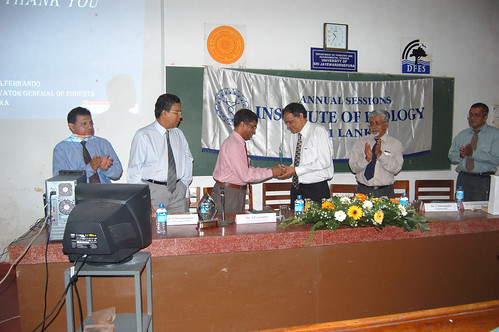
Felicitation of Prof WD Ratnasooriya

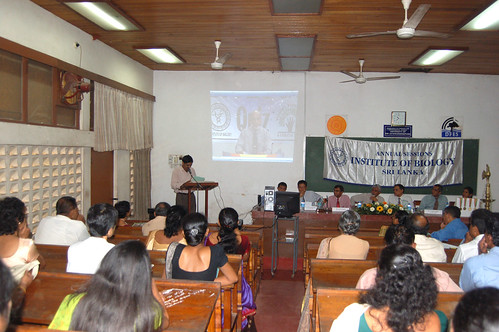
Sessions in Progress:

Felicitation of Prof WD Ratnasooriya
Sessions in Progress:
Plantation Forestry in Sri Lanka: Challenges and Constraints
Presidential Address by Dr. S.M.C.U.P. Subasinghe
President,Institute of Biology
at Annual Sessions of the Institute of Biology, Sri Lanka, 2007 September
Introduction
At the beginning of the last century, Sri Lanka was a rich country in closed canopy natural forests which covered about 80% of the total land area. However, it has been dwindled up to just over 20% at present which has significanlty increased the awareness of the relevant authorities and the general public. Since the forests are organized assemblages of trees, other plants and animals, in complex association with each other and their physical environment, reduction of forest cover has directly and indirectly influenced on other sub-sectors such as agriculture, wood industry, wildlife etc.
The importance of the forest cover in the aspect of its contribution to the national economy was not clearly identified. In 1993, it has been calculated as 1.4% of the gross domestic product. Employment in the sector was estimated at about 170,000. However, since the use of forests for wood and non-wood products (both goods and services) at village or regional level was difficult to estimate and therefore the true contribution to the economy can however be much greater than the above figure.
Deforestation and causes
On a landscape scale, and over long periods of time, naturally developed forest communities result the greatest amount of biological diversity under the prevailing climatic and soil conditions in a given region. Therefore loosing the natural forest cover causes a severe impact of the existing biological diversity and other intangible uses. In 1995, the forestry sector master plan has identified the following results as the most serious consequences of deforestation and forest degradation.
i. biodiversity reduction,
ii. irregular water flow and drying up of natural streams,
iii. shortened lifespan of irrigation channels and reservoirs,
iv. soil erosion and associated loss of fertility,
v. increasing fuelwood scarcity, and
vi. contribution to the greenhouse gas emissions.
The depletion of forest resources is also closely linked to the demand for forest products such as timber, non-timber forest products and fuelwood. Population increase combined with economic growth has resulted in higher demand for housing and business construction, which has increased the demand for wood.
The poverty has been highlighted as one of the major causes of forest degradation because shifting cultivation, illicit felling and encroachment activities are believed to be results of the poverty. Moreover the government projects implemented in 1980 s such as Mahawely, Kirindioya, Pelawatta Sugarcane plantations and Sewanagala Sugarcane plantations contributed to the forest depletion in significant manner, i.e., between 1983 and 1992 the contribution of the above projects to the deforestation is 37%.
Depletion of the forest cover continues in the future even with a slower rate due to a high demand for timber, non-timber products and the land hunger for settlements and agriculture with the increasing population. The expanding population base and economic growth will increase the demand for roundwood and poles from about 2 million m3 in 1995 to 2.7 million m3 in 2020. During the same period, the need for biomass energy will increase from 9.3 million tonnes to 9.7 million tonnes. At the same time, the closed canopy natural forest cover is projected decline to about 17% in 2020.
Other than the wood and non-wood production, the natural forests and forest plantations also provide other environmental services which are demanded by the people. The forestry sector is closely linked to the agriculture and energy sectors. As the population and economy grow, more electricity is needed. Hydropower is the main source of electricity. Therefore, maintenance of the forest cover has become a must to continue the sustainable productivity of the above sub-sectors.
However, the country's wood demand should also be addressed by utilizing the forest resources. Among the highly demanded forest products, sawntimebr, roundwood and fuelwood become more important. Although sawnwood consumption in Sri Lanka (31 m3 per 1000 persons in 1993) is lower than that of the other countries in Asia such as Malaysia, Thailand, it has been projected to be 0.885 million m3 in 2020, i.e. by about 12,600 m3 per year assuming that some substitution of other materials for sawnwood is taken place. According to the forestry sector master plan, the industrial roundwood requirement in 2005 was about 15.61 x 10⁵ m3 which is projected to be more by 4.62 x 10⁵ m3 in 2020,due to the growing demand arisen by the increasing population.
Per capita consumption of paper and paperboard consumption is also low in Sri Lanka when compared with the international figures. However, the demand for paper and paperboard is projected to reach 407,000 t in 2020 compared with 130,000 t in 1993. The average annual growth in total paper and paperboard demand is forecast to be 4.3% (9400 t). Per capita consumption in 2020 will be about 18 kg per year.
Although there are not proper statistics available on the non-wood forest product consumption, most of the population in Sri Lanka uses those products directly or indirectly. Among the mostly used products, medicinal plants, rattan, bamboo, kithul products and wildlife products are prominent.
Electricity and telephone poles are more important in terms of value than in terms of wood consumption. The long-term annual demand for wooden electricity poles is expected to stay at 20,000-25,000 pieces (about 3000 m3), in spite of extensive electrification schemes. However, there will be a very little demand for wooden telephone poles in the future.
The contribution of the natural forests to the bio-fuel supply is 7% which is 4% by the forest plantations. The country's bio-fuel requirement in 2020 will be 0.889 million m3. However, there might be a change of this figure in the future due to the increase of use of LP gas and electricity. Moreover, although Sri Lanka is self-sufficient in fuelwood supply as a country, there are fuelwood deficit regions such as Colombo, Matara, and Nuwara-Eliya. Therefore, unless a proper distribution system is introduced, use of fuelwood will also become a major problem.
Forest plantations
In order to address the timber and fuel-wood demand in the country, forest plantations were introduced as the alternatives. One of the other objectives formulated at present is that to address the issue on timber imports from the other countries such as Malaysia. Forest plantations were established for the first time in the 1870s, although most of the planting has taken place since the 1950s. Within that period, about 89,000 ha of forest plantations of varying quality have been established. This area comprises some 5000 ha of mainly fuelwood plantations, which were mainly under the control of tea estates and a tobacco company. In 2004, Sri Lanka Forest Department maintained 93,000 ha of plantations in the entire Island.
Forest plantations in Sri Lanka have mainly been established using exotic species due to their faster growth rates over the indigenous species. Although the history of introducing exotic timber species goes back to 1870s, most of the planting has taken place since the 1950s. The idea of this exercise was to have an alternative timber resource to protect the existing natural forest cover and to rehabilitate the environmentally damaged areas within a short period of time. At present the most favourable species for the plantation forestry are teak, eucalypts, pines, acacias and mahogany.
Although the primary aim of the establishment of forest plantations are to address the timber and fuel wood demand, there are other benefits which might be similar to some of the benefits that are obtained from the natural forests as given below. However, the biodiversity and some of the environmental values cannot be met in the forest plantations especially managed for the timber production. These benefits are:
i. increase of wood production,
ii. savings in the government expenditure,
iii. improvement of landuse,
iv. reduction of the pressure on the natural forests,
v. reduction of timber imports,
vi. increase of revenue for the state, and
vii. increase of rural incomes and employment.
Forest plantations under state control will have to provide a reasonable return to society in order to mark them as true production forests, and as the minimum, the benefits accruing to society should not be lower than the costs. Tree growing has to provide higher return than agriculture before a farmer is interested in investing in it, because of the longer production period and greater risks involved. Private sector investors always have investment alternatives, and wood production still has to demonstrate its potential as a viable investment in Sri Lanka.
The profitability of small scale plantations managed by farmers was assessed by assuming that the yields would be 20% less than in a large scale plantation. According to the financial analysis, small scale monoculture plantations would not be profitable for farmers. The real rates of return of all the selected species under normal site conditions were clearly below the indicative real rate of return (20%) that a farmer would acquire. However, the results do not mean that the small-scale forest plantations would not be established by the farmers under right conditions. When trees are planted on small scale or incorporated into the farming system, tree growing can be a profitable proposition, as is demonstrated by the dynamic home garden sub-sector that is providing wood for the industry, and valuable income and raw material to the farmers.
Involvement of private sector in plantation forestry
In order to increase the tree cover by means of forest plantations to address the earlier mentioned requirements, and to save the government funds for other necessities, the private sector participation for the establishment of forest plantations has been promoted. However, due to the longer duration that has to be waited to obtain the profits, until recent, investments in forestry sector was not popular among the private sector. However, almost all the major regional planting companies (i.e., tea and rubber) stepped forward initially and started planting timber species on their barren and abandoned lands in both upcountry and low country for the production of timber in addition to the already maintained fuelwood plantations. However, the view of the government was not only to focus the improvement of the existing plantations but also on involving the non-estate sector in the establishment and management of new plantations. At the same time the state has recognised the necessity of supporting policy, legislation and other support systems such as extension and access to financing are in place.
Management of forest plantations
Managed forests are generally less complex than natural forests because management typically attempts to optimize only a few species - usually those of high commercial value; those which are characterized by fast growth (high productivity); or those that can be grown in pure stands or in relatively simple mixtures.
Villages in forest concessions, timber harvesting, timber industry and population are closely linked. This means that sustainable forest use and agriculture are also closely linked. However, the private sector engaged in timber harvesting, timber industry, job creation cannot take care of agriculture. Agriculture is a completely different branch with a different approach and different expertise. To harmonise both - forestry and agriculture - government support is necessary, and governments need the support of donors in order to integrate forestry/agriculture in projects with research and education. However, it has been recognised that the private investors have to respect the existing laws and traditional rights especially at the harvesting period. Requests by the population for better regional infrastructure and road-building are followed by private companies when supported by government authorities and financially feasible.
Challenges in plantation forestry
The planetary ecosystem at present may have a minimum threshold of forest cover necessary to support a certain level of human habitation. Mostly, foresters assume that an existing, desirable forest cover type can be maintained by the same silvicultural treatment that was successful in another area or on another site. This, of course, may not be so if the two stands exist on significantly different site types or have resulted from different disturbances.
Furthermore, as emphasis in forest management changes from simply trying to grow the "best trees" on "the best sites" toward maintaining forests in a more natural condition while still utilizing the resources, it is becoming even more important that attention has to be paid to the physical environment that controls forest ecosystems. One of the reasons for this change may be due to the understanding of the environmental safeguards or due to the recognition of the importance of the requirement of the standards such as forest certification.
Forest certification has been introduced to promote the sustainable forest management with the protection of existing biodiversity. However, medium and small companies will not be able to cover the costs of certification because there is no guaranteed price increment for the certified timber at the world market at present. Moreover, the opportunity to export the Sri Lanka timber to the countries interested in certified products is low under the present government policy. This means that these markets have to bear certification costs alone or five times more than other markets not bearing those costs. In addition to higher production costs for improved sustainable forest management, the growers will have to bear quite important costs for certification.
Constraints in plantation management
Forest management is a complex exercise due to the web factors involved with it other than the economic, ecological and cultural aspects. There is also an involvement with the technical aspects, institutional rules, political influences which are decisive for the behavior of the user of natural resources in general and of the forest in particular. In constitutional states these limits and possibilities for owners and users are fixed in legal acts, such as constitutions, laws, decrees etc.
Among the major constraints faced in plantation forestry, the land availability, social issues, environmental issues, lack of scientific information and research become prominent. At the same time, the unforeseen catastrophes create significant problems by reducing the growth rate or destroying a part or the entire forest.
Availability of land
Land availability, sustainability and the profitability of plantation forestry are major issues if industrial plantations are to be established in new areas. Locating large new areas for forest plantation development will not be a very easy task. In the more productive wet zone and up country areas, competition for land is intense and the forest plantation sector cannot expect to acquire significant additional land unless they are taken from other uses. Availability of the suitable lands is the main constraint faced by the private sector investors at present. Mostly the available lands are infertile or abandoned after planting agricultural crops such as rubber. Obtaining a suitable land with a large extent is more problematic in the wet zone. In order to obtain a higher growth from infertile lands, most intensive management practices have to be applied which can increase the cost significantly. It will also take time to reach high quality productivity levels on such lands. The expected final harvest of the private forest plantations are much shorter than that of the Forest Department plantations and therefore more and more financial inputs may be necessary to uplift such plantation conditions.
Social and environmental impacts and risks
Management practices that are ecologically sound on a site or local ecosystem level may not address landscape and regional concerns. Although private owners are not obligated to consider regional ecological concerns (other than those specifically covered by law, e.g., harvesting of endangered species, harvesting on high slopes or sensitive areas), many of them are interested, and often eager, to accommodate them within limits of economic efficiency.
Environmental issues
Plantation forestry especially with even-aged monocultures is criticised in causing environmental degradation. The situation becomes more severe with the exotic species such as pines and eucalypts. With those plantations, the issues have emerged on degradation of the soil quality especially when they are planted on slopes. Lack of biodiversity in such forests is also common. Moreover, there are issues regarding the aesthetic values. The erosion problem becomes severe if the plantations are clear felled after reaching the maturity. Therefore the necessity of a system to protect the soil quality by using proper management schems is always highlighted.
Unforeseen catastrophes
Unforeseen catastrophes are common in forest plantations. In Sri Lanka the major damage is caused by the fire, diseases and pests. Teak in the dry zone and eucalypts in the up country are vulnerable for fire. Teak is commonly attacked by the defoliators and the skeletonizers at the nursery stage and very young stage in the field. However, mahogany is considered as the best example for vulnerable plantation species for the insect attack that can be caused by shoot borer called Hypsophylla.
Lack of scientific knowledge and research
This has become a serious issue for the private investors on plantation forestry. In order to make their plantations economically viable, the age for the final harvest for both mahogany and teak which are the preferred species by them, has been decided around 20 years which is significantly lower than the state plantations. Therefore, they have to use the most intensive management principles to achieve the expected growth within the given period. In order to facilitate these requirements, enough studies of growth rates, growth enhancement, site quality differences, and protective measures from pests and diseases are yet to be conducted.
Conclusion
Two things are clear concerning comprehensive and newly strengthened national programmes to sustain forests: they must be country-driven and country-initiated; and they will, in many countries, require new and more effective international support. Sustaining forests can best be achieved through a combination of national and international policy reforms, long-term plans to stabilize forest areas and industrial countries' commitment of greatly enhanced financial and technical support to developing countries.
The investor-institute partnership should be maintained in order to achieve the goals set in the plantation forest management and a flow of information from one sector to the other should be established. Moreover, partnership agreements could specify the actions to be taken by countries inside and outside the forest sector to address the underlying causes of deforestation and the support and actions to be undertaken by the international community.
President,
at Annual Sessions of the Institute of Biology, Sri Lanka, 2007 September
Introduction
At the beginning of the last century, Sri Lanka was a rich country in closed canopy natural forests which covered about 80% of the total land area. However, it has been dwindled up to just over 20% at present which has significanlty increased the awareness of the relevant authorities and the general public. Since the forests are organized assemblages of trees, other plants and animals, in complex association with each other and their physical environment, reduction of forest cover has directly and indirectly influenced on other sub-sectors such as agriculture, wood industry, wildlife etc.
The importance of the forest cover in the aspect of its contribution to the national economy was not clearly identified. In 1993, it has been calculated as 1.4% of the gross domestic product. Employment in the sector was estimated at about 170,000. However, since the use of forests for wood and non-wood products (both goods and services) at village or regional level was difficult to estimate and therefore the true contribution to the economy can however be much greater than the above figure.
Deforestation and causes
On a landscape scale, and over long periods of time, naturally developed forest communities result the greatest amount of biological diversity under the prevailing climatic and soil conditions in a given region. Therefore loosing the natural forest cover causes a severe impact of the existing biological diversity and other intangible uses. In 1995, the forestry sector master plan has identified the following results as the most serious consequences of deforestation and forest degradation.
i. biodiversity reduction,
ii. irregular water flow and drying up of natural streams,
iii. shortened lifespan of irrigation channels and reservoirs,
iv. soil erosion and associated loss of fertility,
v. increasing fuelwood scarcity, and
vi. contribution to the greenhouse gas emissions.
The depletion of forest resources is also closely linked to the demand for forest products such as timber, non-timber forest products and fuelwood. Population increase combined with economic growth has resulted in higher demand for housing and business construction, which has increased the demand for wood.
The poverty has been highlighted as one of the major causes of forest degradation because shifting cultivation, illicit felling and encroachment activities are believed to be results of the poverty. Moreover the government projects implemented in 1980 s such as Mahawely, Kirindioya, Pelawatta Sugarcane plantations and Sewanagala Sugarcane plantations contributed to the forest depletion in significant manner, i.e., between 1983 and 1992 the contribution of the above projects to the deforestation is 37%.
Depletion of the forest cover continues in the future even with a slower rate due to a high demand for timber, non-timber products and the land hunger for settlements and agriculture with the increasing population. The expanding population base and economic growth will increase the demand for roundwood and poles from about 2 million m3 in 1995 to 2.7 million m3 in 2020. During the same period, the need for biomass energy will increase from 9.3 million tonnes to 9.7 million tonnes. At the same time, the closed canopy natural forest cover is projected decline to about 17% in 2020.
Other than the wood and non-wood production, the natural forests and forest plantations also provide other environmental services which are demanded by the people. The forestry sector is closely linked to the agriculture and energy sectors. As the population and economy grow, more electricity is needed. Hydropower is the main source of electricity. Therefore, maintenance of the forest cover has become a must to continue the sustainable productivity of the above sub-sectors.
However, the country's wood demand should also be addressed by utilizing the forest resources. Among the highly demanded forest products, sawntimebr, roundwood and fuelwood become more important. Although sawnwood consumption in Sri Lanka (31 m3 per 1000 persons in 1993) is lower than that of the other countries in Asia such as Malaysia, Thailand, it has been projected to be 0.885 million m3 in 2020, i.e. by about 12,600 m3 per year assuming that some substitution of other materials for sawnwood is taken place. According to the forestry sector master plan, the industrial roundwood requirement in 2005 was about 15.61 x 10⁵ m3 which is projected to be more by 4.62 x 10⁵ m3 in 2020,due to the growing demand arisen by the increasing population.
Per capita consumption of paper and paperboard consumption is also low in Sri Lanka when compared with the international figures. However, the demand for paper and paperboard is projected to reach 407,000 t in 2020 compared with 130,000 t in 1993. The average annual growth in total paper and paperboard demand is forecast to be 4.3% (9400 t). Per capita consumption in 2020 will be about 18 kg per year.
Although there are not proper statistics available on the non-wood forest product consumption, most of the population in Sri Lanka uses those products directly or indirectly. Among the mostly used products, medicinal plants, rattan, bamboo, kithul products and wildlife products are prominent.
Electricity and telephone poles are more important in terms of value than in terms of wood consumption. The long-term annual demand for wooden electricity poles is expected to stay at 20,000-25,000 pieces (about 3000 m3), in spite of extensive electrification schemes. However, there will be a very little demand for wooden telephone poles in the future.
The contribution of the natural forests to the bio-fuel supply is 7% which is 4% by the forest plantations. The country's bio-fuel requirement in 2020 will be 0.889 million m3. However, there might be a change of this figure in the future due to the increase of use of LP gas and electricity. Moreover, although Sri Lanka is self-sufficient in fuelwood supply as a country, there are fuelwood deficit regions such as Colombo, Matara, and Nuwara-Eliya. Therefore, unless a proper distribution system is introduced, use of fuelwood will also become a major problem.
Forest plantations
In order to address the timber and fuel-wood demand in the country, forest plantations were introduced as the alternatives. One of the other objectives formulated at present is that to address the issue on timber imports from the other countries such as Malaysia. Forest plantations were established for the first time in the 1870s, although most of the planting has taken place since the 1950s. Within that period, about 89,000 ha of forest plantations of varying quality have been established. This area comprises some 5000 ha of mainly fuelwood plantations, which were mainly under the control of tea estates and a tobacco company. In 2004, Sri Lanka Forest Department maintained 93,000 ha of plantations in the entire Island.
Forest plantations in Sri Lanka have mainly been established using exotic species due to their faster growth rates over the indigenous species. Although the history of introducing exotic timber species goes back to 1870s, most of the planting has taken place since the 1950s. The idea of this exercise was to have an alternative timber resource to protect the existing natural forest cover and to rehabilitate the environmentally damaged areas within a short period of time. At present the most favourable species for the plantation forestry are teak, eucalypts, pines, acacias and mahogany.
Although the primary aim of the establishment of forest plantations are to address the timber and fuel wood demand, there are other benefits which might be similar to some of the benefits that are obtained from the natural forests as given below. However, the biodiversity and some of the environmental values cannot be met in the forest plantations especially managed for the timber production. These benefits are:
i. increase of wood production,
ii. savings in the government expenditure,
iii. improvement of landuse,
iv. reduction of the pressure on the natural forests,
v. reduction of timber imports,
vi. increase of revenue for the state, and
vii. increase of rural incomes and employment.
Forest plantations under state control will have to provide a reasonable return to society in order to mark them as true production forests, and as the minimum, the benefits accruing to society should not be lower than the costs. Tree growing has to provide higher return than agriculture before a farmer is interested in investing in it, because of the longer production period and greater risks involved. Private sector investors always have investment alternatives, and wood production still has to demonstrate its potential as a viable investment in Sri Lanka.
The profitability of small scale plantations managed by farmers was assessed by assuming that the yields would be 20% less than in a large scale plantation. According to the financial analysis, small scale monoculture plantations would not be profitable for farmers. The real rates of return of all the selected species under normal site conditions were clearly below the indicative real rate of return (20%) that a farmer would acquire. However, the results do not mean that the small-scale forest plantations would not be established by the farmers under right conditions. When trees are planted on small scale or incorporated into the farming system, tree growing can be a profitable proposition, as is demonstrated by the dynamic home garden sub-sector that is providing wood for the industry, and valuable income and raw material to the farmers.
Involvement of private sector in plantation forestry
In order to increase the tree cover by means of forest plantations to address the earlier mentioned requirements, and to save the government funds for other necessities, the private sector participation for the establishment of forest plantations has been promoted. However, due to the longer duration that has to be waited to obtain the profits, until recent, investments in forestry sector was not popular among the private sector. However, almost all the major regional planting companies (i.e., tea and rubber) stepped forward initially and started planting timber species on their barren and abandoned lands in both upcountry and low country for the production of timber in addition to the already maintained fuelwood plantations. However, the view of the government was not only to focus the improvement of the existing plantations but also on involving the non-estate sector in the establishment and management of new plantations. At the same time the state has recognised the necessity of supporting policy, legislation and other support systems such as extension and access to financing are in place.
Management of forest plantations
Managed forests are generally less complex than natural forests because management typically attempts to optimize only a few species - usually those of high commercial value; those which are characterized by fast growth (high productivity); or those that can be grown in pure stands or in relatively simple mixtures.
Villages in forest concessions, timber harvesting, timber industry and population are closely linked. This means that sustainable forest use and agriculture are also closely linked. However, the private sector engaged in timber harvesting, timber industry, job creation cannot take care of agriculture. Agriculture is a completely different branch with a different approach and different expertise. To harmonise both - forestry and agriculture - government support is necessary, and governments need the support of donors in order to integrate forestry/agriculture in projects with research and education. However, it has been recognised that the private investors have to respect the existing laws and traditional rights especially at the harvesting period. Requests by the population for better regional infrastructure and road-building are followed by private companies when supported by government authorities and financially feasible.
Challenges in plantation forestry
The planetary ecosystem at present may have a minimum threshold of forest cover necessary to support a certain level of human habitation. Mostly, foresters assume that an existing, desirable forest cover type can be maintained by the same silvicultural treatment that was successful in another area or on another site. This, of course, may not be so if the two stands exist on significantly different site types or have resulted from different disturbances.
Furthermore, as emphasis in forest management changes from simply trying to grow the "best trees" on "the best sites" toward maintaining forests in a more natural condition while still utilizing the resources, it is becoming even more important that attention has to be paid to the physical environment that controls forest ecosystems. One of the reasons for this change may be due to the understanding of the environmental safeguards or due to the recognition of the importance of the requirement of the standards such as forest certification.
Forest certification has been introduced to promote the sustainable forest management with the protection of existing biodiversity. However, medium and small companies will not be able to cover the costs of certification because there is no guaranteed price increment for the certified timber at the world market at present. Moreover, the opportunity to export the Sri Lanka timber to the countries interested in certified products is low under the present government policy. This means that these markets have to bear certification costs alone or five times more than other markets not bearing those costs. In addition to higher production costs for improved sustainable forest management, the growers will have to bear quite important costs for certification.
Constraints in plantation management
Forest management is a complex exercise due to the web factors involved with it other than the economic, ecological and cultural aspects. There is also an involvement with the technical aspects, institutional rules, political influences which are decisive for the behavior of the user of natural resources in general and of the forest in particular. In constitutional states these limits and possibilities for owners and users are fixed in legal acts, such as constitutions, laws, decrees etc.
Among the major constraints faced in plantation forestry, the land availability, social issues, environmental issues, lack of scientific information and research become prominent. At the same time, the unforeseen catastrophes create significant problems by reducing the growth rate or destroying a part or the entire forest.
Availability of land
Land availability, sustainability and the profitability of plantation forestry are major issues if industrial plantations are to be established in new areas. Locating large new areas for forest plantation development will not be a very easy task. In the more productive wet zone and up country areas, competition for land is intense and the forest plantation sector cannot expect to acquire significant additional land unless they are taken from other uses. Availability of the suitable lands is the main constraint faced by the private sector investors at present. Mostly the available lands are infertile or abandoned after planting agricultural crops such as rubber. Obtaining a suitable land with a large extent is more problematic in the wet zone. In order to obtain a higher growth from infertile lands, most intensive management practices have to be applied which can increase the cost significantly. It will also take time to reach high quality productivity levels on such lands. The expected final harvest of the private forest plantations are much shorter than that of the Forest Department plantations and therefore more and more financial inputs may be necessary to uplift such plantation conditions.
Social and environmental impacts and risks
Management practices that are ecologically sound on a site or local ecosystem level may not address landscape and regional concerns. Although private owners are not obligated to consider regional ecological concerns (other than those specifically covered by law, e.g., harvesting of endangered species, harvesting on high slopes or sensitive areas), many of them are interested, and often eager, to accommodate them within limits of economic efficiency.
Environmental issues
Plantation forestry especially with even-aged monocultures is criticised in causing environmental degradation. The situation becomes more severe with the exotic species such as pines and eucalypts. With those plantations, the issues have emerged on degradation of the soil quality especially when they are planted on slopes. Lack of biodiversity in such forests is also common. Moreover, there are issues regarding the aesthetic values. The erosion problem becomes severe if the plantations are clear felled after reaching the maturity. Therefore the necessity of a system to protect the soil quality by using proper management schems is always highlighted.
Unforeseen catastrophes
Unforeseen catastrophes are common in forest plantations. In Sri Lanka the major damage is caused by the fire, diseases and pests. Teak in the dry zone and eucalypts in the up country are vulnerable for fire. Teak is commonly attacked by the defoliators and the skeletonizers at the nursery stage and very young stage in the field. However, mahogany is considered as the best example for vulnerable plantation species for the insect attack that can be caused by shoot borer called Hypsophylla.
Lack of scientific knowledge and research
This has become a serious issue for the private investors on plantation forestry. In order to make their plantations economically viable, the age for the final harvest for both mahogany and teak which are the preferred species by them, has been decided around 20 years which is significantly lower than the state plantations. Therefore, they have to use the most intensive management principles to achieve the expected growth within the given period. In order to facilitate these requirements, enough studies of growth rates, growth enhancement, site quality differences, and protective measures from pests and diseases are yet to be conducted.
Conclusion
Two things are clear concerning comprehensive and newly strengthened national programmes to sustain forests: they must be country-driven and country-initiated; and they will, in many countries, require new and more effective international support. Sustaining forests can best be achieved through a combination of national and international policy reforms, long-term plans to stabilize forest areas and industrial countries' commitment of greatly enhanced financial and technical support to developing countries.
The investor-institute partnership should be maintained in order to achieve the goals set in the plantation forest management and a flow of information from one sector to the other should be established. Moreover, partnership agreements could specify the actions to be taken by countries inside and outside the forest sector to address the underlying causes of deforestation and the support and actions to be undertaken by the international community.
Citation on Professor W D Ratnasooriya
Presented byUniversity of Colombo
 It is an honour and privilege for me to present to you, Professor Wanigasekera Daya Ratnasooriya for felicitation by the Institute of Biology, in recognition of his invaluable service to the field of Biology in Sri Lanka. Professor Ratnasooriya is no stranger to the Institute of Biology and to this audience. He was one of the founder secretaries of the Institute of Biology and served on its council in 1988/89.
Professor Ratnasooriya had his primary and secondary education at Royal College, Colombo. He gained admission to the University of Ceylon, Sri Lanka, in 1968 and graduated with a Second Class Honours in Zoology (Upper Division), in 1972. He then joined the Department of Zoology as an Assistant Lecturer in 1973 and proceeded to the University of Strathclyde in Glasgow, UK in 1975, from where he obtained his PhD in 1978. On his return to Sri Lanka, he was promoted to the post of Lecturer in 1979. He has the singular honour of becoming the youngest Professor of Zoology in Sri Lanka in 1986, at the age of thirty-eight, having earned a merit promotion directly from Lecturer, a rare achievement in those days. He was appointed to the Chair in Zoology two years later. He then earned another merit promotion to Senior Professor in Zoology in 1991. All this bears ample testimony to his meteoric rise in his chosen profession as a university academic and scientist.
I have known Professor Ratnasooriya over half my life, first as a senior student when I joined the university and then as a member of the academic staff of the Department of Zoology. Although I have not had the good fortune of being taught by him, I am told by several of his students, some of whom are now members of the department, that he is an excellent teacher who has the gift of being able to convey complex physiology in a simple manner that could be easily understood by students.
Research has always been of great interest and importance to Professor Ratnasooriya and that is his forte. Since his return to the Department of Zoology after obtaining his PhD, he has become one of the foremost researchers in Sri Lanka. His research interests are wide and varied, ranging from mammalian reproductive physiology, biology of the Sri Lankan elephant, ecology & biology of bats in Sri Lanka to pharmacological & toxicological studies on Sri Lankan plants and bioactivity of Sri Lankan tea. It is remarkable that almost all of this research work has been done in Sri Lanka, with limited facilities, having being funded mainly by local funding agencies such as the National Science Foundation. I believe that there is no other zoologist in Sri Lanka who has published his research work as much as Professor Ratnasooriya. He has to his credit 253 research publications in peer reviewed prestigious local and international journals, many of which are indexed in international data bases such as Science Citation Index and Current Contents. He has the rare distinction of being the Sri Lankan Scientist having the highest individual cumulative index for research publications for the period 1991-2001, cited in the Science Citation Index, according to the report of the National Research Council of Sri Lanka. .In addition he has 139 research communications presented at national and international conferences.
In recognition of his outstanding achievements as a researcher and scientist he has received many awards. These include the Presidential Bonus Research Award for International Scientific Publications cited in World Science Citation Index in 1999, 2000, 2002 , 2006 and 2007 , the CVCD Excellence Award for the most outstanding researcher in Biological Sciences in 2006, the Sri Lanka Association for the Advancement of Science, General Research Committee Award for outstanding contribution to scientific research in Sri Lanka in 2005, the Research Achievement Award from the University Grants Commission for Excellence in research based on publications in indexed journals in 2004, merit awards three times from the National Science Foundation, Sri Lanka, in 1988,1991 and 1993) and the Annual Research Award for the best research scientist in the Faculty of Science, University of Colombo over the past six consecutive years , from 2001 - 2006. He was elected a Fellow of the Third World Academy of Sciences (TWAS) in 2005 and is a Fellow of the National Academy of Sciences, Sri Lanka and a Fellow and Chartered Biologist, Institute of Biology, Sri Lanka. Professor Ratnasooriya has now reached the pinnacle of his distinguished and outstanding career as a scientist having earned the Doctor of Science degree from the University of Peradeniya this year. In spite of all these achievements, he still remains the quiet, soft spoken and unassuming person that he always was.
Professor Ratnasooriya has also made numerous and valuable contributions, both at university and national level, in the field of Biology. He served as Head of the Department of Zoology, University of Colombo from 1987 to 2002 and served in various committees within and outside the university. He has several research students working under his supervision and so far, 5 M.Sc., 8 M.Phil. and 6 PhD degrees have been awarded to them. He has served as External Examiner and Visiting Lecturer to several other universities in Sri Lanka and functioned as member of the editorial boards and as referee of several scientific journals both nationally & internationally.
His contribution to the GCE Advanced Level in Zoology in the past and now in Biology is invaluable. He has authored several text books in Zoology and served as member of syllabus and curriculum revision committees in Zoology for the G.C.E Advanced Level. He has been a member of the Setting Board of Zoology and is at present a member of the setting Board of Biology. He functioned as the Co-controlling Chief Examiner in Zoology from 1988 to 1993, Controlling Chief Examiner in Zoology from 1994-2000 and is presently one of the three Co-controlling Chief Examiners of Biology.
In recognition of his long, dedicated and scholarly service to the advancement of biology and research in Sri Lanka, the Institute of Biology is honoured to felicitate Professor W.D. Ratnasooriya, its founder secretary and Senior Professor of Zoology at the University of Colombo.
 It is an honour and privilege for me to present to you, Professor Wanigasekera Daya Ratnasooriya for felicitation by the Institute of Biology, in recognition of his invaluable service to the field of Biology in Sri Lanka. Professor Ratnasooriya is no stranger to the Institute of Biology and to this audience. He was one of the founder secretaries of the Institute of Biology and served on its council in 1988/89.
Professor Ratnasooriya had his primary and secondary education at Royal College, Colombo. He gained admission to the University of Ceylon, Sri Lanka, in 1968 and graduated with a Second Class Honours in Zoology (Upper Division), in 1972. He then joined the Department of Zoology as an Assistant Lecturer in 1973 and proceeded to the University of Strathclyde in Glasgow, UK in 1975, from where he obtained his PhD in 1978. On his return to Sri Lanka, he was promoted to the post of Lecturer in 1979. He has the singular honour of becoming the youngest Professor of Zoology in Sri Lanka in 1986, at the age of thirty-eight, having earned a merit promotion directly from Lecturer, a rare achievement in those days. He was appointed to the Chair in Zoology two years later. He then earned another merit promotion to Senior Professor in Zoology in 1991. All this bears ample testimony to his meteoric rise in his chosen profession as a university academic and scientist.
I have known Professor Ratnasooriya over half my life, first as a senior student when I joined the university and then as a member of the academic staff of the Department of Zoology. Although I have not had the good fortune of being taught by him, I am told by several of his students, some of whom are now members of the department, that he is an excellent teacher who has the gift of being able to convey complex physiology in a simple manner that could be easily understood by students.
Research has always been of great interest and importance to Professor Ratnasooriya and that is his forte. Since his return to the Department of Zoology after obtaining his PhD, he has become one of the foremost researchers in Sri Lanka. His research interests are wide and varied, ranging from mammalian reproductive physiology, biology of the Sri Lankan elephant, ecology & biology of bats in Sri Lanka to pharmacological & toxicological studies on Sri Lankan plants and bioactivity of Sri Lankan tea. It is remarkable that almost all of this research work has been done in Sri Lanka, with limited facilities, having being funded mainly by local funding agencies such as the National Science Foundation. I believe that there is no other zoologist in Sri Lanka who has published his research work as much as Professor Ratnasooriya. He has to his credit 253 research publications in peer reviewed prestigious local and international journals, many of which are indexed in international data bases such as Science Citation Index and Current Contents. He has the rare distinction of being the Sri Lankan Scientist having the highest individual cumulative index for research publications for the period 1991-2001, cited in the Science Citation Index, according to the report of the National Research Council of Sri Lanka. .In addition he has 139 research communications presented at national and international conferences.
In recognition of his outstanding achievements as a researcher and scientist he has received many awards. These include the Presidential Bonus Research Award for International Scientific Publications cited in World Science Citation Index in 1999, 2000, 2002 , 2006 and 2007 , the CVCD Excellence Award for the most outstanding researcher in Biological Sciences in 2006, the Sri Lanka Association for the Advancement of Science, General Research Committee Award for outstanding contribution to scientific research in Sri Lanka in 2005, the Research Achievement Award from the University Grants Commission for Excellence in research based on publications in indexed journals in 2004, merit awards three times from the National Science Foundation, Sri Lanka, in 1988,1991 and 1993) and the Annual Research Award for the best research scientist in the Faculty of Science, University of Colombo over the past six consecutive years , from 2001 - 2006. He was elected a Fellow of the Third World Academy of Sciences (TWAS) in 2005 and is a Fellow of the National Academy of Sciences, Sri Lanka and a Fellow and Chartered Biologist, Institute of Biology, Sri Lanka. Professor Ratnasooriya has now reached the pinnacle of his distinguished and outstanding career as a scientist having earned the Doctor of Science degree from the University of Peradeniya this year. In spite of all these achievements, he still remains the quiet, soft spoken and unassuming person that he always was.
Professor Ratnasooriya has also made numerous and valuable contributions, both at university and national level, in the field of Biology. He served as Head of the Department of Zoology, University of Colombo from 1987 to 2002 and served in various committees within and outside the university. He has several research students working under his supervision and so far, 5 M.Sc., 8 M.Phil. and 6 PhD degrees have been awarded to them. He has served as External Examiner and Visiting Lecturer to several other universities in Sri Lanka and functioned as member of the editorial boards and as referee of several scientific journals both nationally & internationally.
His contribution to the GCE Advanced Level in Zoology in the past and now in Biology is invaluable. He has authored several text books in Zoology and served as member of syllabus and curriculum revision committees in Zoology for the G.C.E Advanced Level. He has been a member of the Setting Board of Zoology and is at present a member of the setting Board of Biology. He functioned as the Co-controlling Chief Examiner in Zoology from 1988 to 1993, Controlling Chief Examiner in Zoology from 1994-2000 and is presently one of the three Co-controlling Chief Examiners of Biology.
In recognition of his long, dedicated and scholarly service to the advancement of biology and research in Sri Lanka, the Institute of Biology is honoured to felicitate Professor W.D. Ratnasooriya, its founder secretary and Senior Professor of Zoology at the University of Colombo.
Subscribe to:
Posts (Atom)