Thursday, March 19, 2009

Sri Lankan Biology Olympiad 2009

Sri Lankan students can compete and win medals in Sri Lankan Biology Olympiad 2009. Four students will also be selected to participate International Biology Olympiad in 2010 in South Korea.

The examination to select the winners will be conducted from 10.00 am to 12.00 noon on Sunday 28 June 2009 at the following Centers:

  • University of Colombo, Colombo
  • Eastern University, Batticaloa
  • University of Jaffna, Jaffna
  • University of Kelaniya, Kelaniya
  • University of Peradeniya, Peradeniya
  • University of Ruhuna, Matara
  • University of Sri Jayewardenepura, Nugegoda
Read more

Tuesday, September 09, 2008

Grassroot Innovations and Traditional Knowledge for National Development

A Seminar Organised by Institute of Biology in collaboration with Sri Lanka Resource Centre for Indigenous Knowledge (SLARCIK) and Media Resource Service of SLAAS will be held at SLAAS, Colombo 7 on 25th September, 2008.

Programme

8.30 a.m. Registration of Participants
8.45 a.m. Procession to the Auditorium with the traditional dancing
9.00 a.m. Lighting of the Oil Lamp
9.05 a.m. Welcome Address by Dr. S. Premakumara, President of the Institute of Biology, Sri Lanka
9.15 a.m. Introduction to SLARCIK and the Status of Indigenous/Traditional Knowledge practices in Sri Lanka, an Overview
Prof. Hemanthi Ranasinghe, Director, SLARCIK and
Professor of Forestry and Environmental Science, University of Sri Jayewardenepura

10.00 a.m. Tea

10.15 a.m. Traditional Knowledge in Irrigation with special reference to Cascade Systems
Prof. C.M. Maddumabandara, Emeritus Professor of Geography, University of Peradeniya
11.00 a.m. Traditional Knowledge and Health
Dr. Danister Perera, Registrar, Sri Lanka Ayurveda Council
11.45 a.m. Traditional Knowledge in Climate Interpretation
Mr. W.B. Herath, Senior Assistant Registrar, University of Sri Jayewardenepura & Hony. Secretary, SLARCIK

12. 15 p.m. General Discussion
1.00 p.m. Lunch

2.00 p.m. Traditional Knowledge and agriculture
Mr. G.K. Upawansa, Practitioner and Veteran in Indigenous Agriculture

2.45 p.m. Cosmic Influences in Healthy Crop Production
Mrs. Wimala Devanarayana, Author of the book on ‘Cosmic Influences in Healthy Crop Production

3.05 p.m. Tea

3.20 p.m. Traditional Knowledge in language and communication
Prof. Ratnasiri Arangala, Department of Sinhala and Mass Communication
University of Sri Jayewardenepura

3.40 p.m. Sociological aspects in traditional knowledge
Dr. W.M. Dhanapala, Senior Lecturer, Department of Sociology and Anthropology, University of Sri Jayewardenepura

4.00 p.m. Traditional knowledge in building construction
Prof. Nimal de Silva, Director, Post Graduate Institute of Architecture

4.20 p.m. Traditional Knowledge Policies
Mr. T.K. Asoka de Silva
Secretary, Centre for Traditional Knowledge Research and Development

4.40 p.m. General Discussion
5.00 p.m. End of Workshop

Thursday, February 28, 2008

Prof Valentine Basnayake

Professor Valentine Basnayake, born on 1st October, 1925 had a distinguished academic career at St Josephs College and Colombo Medical School and continued at the University of Oxford for post-graduate studies. I had the good fortune of meeting Professor Basnayake in the year 1969 as a student in Physiology, exactly 36 years ago. As a student of Physiology I really experienced the practical, methodical and simplistic approach of his teaching. He spelt out every key word on the black board and explained the physiological principles in his characteristic gentle and soft style. The approach he adopted for practical classes were more interesting, as he developed a investigative approach in teaching practical skills in Physiology. In many occasions the necessary data were collected from the students themselves and discussed the data to highlight the underlying physiological Principles. It is indeed an enriching experience to the learner since the approach was totally new and innovative. It was Professor Basnayake who taught me the simple and practical approach to look at scientific phenomena. He loved nature and demonstrated it in his every action and reaction. Why I mentioned action, because, I used to see him go to the sink and wash his hands, not washing but just waiting patiently. The reason was there were some ants that were allowed to escape from being washed away by the gushing water from the tap. Why I mentioned the word reaction, because one day he was riding his Vespa scooter, a cat had crossed the path and his immediate reaction was to save the cat and as a result he was injured. These incidents amply speak his true love for life and nature. As a true and practical biologist he pioneered the school biology project that encouraged the secondary school children to learn biology and motivated to appreciate nature by a practical approach.

Prof Basnayake also showed a keen interest on playing the piano and excelled in this field along with other contemporary medical colleagues such as Professors S B Dissanayake, Senaka Bibile, S R Kottegoda, Earl Fonseka and Dr Mark Amarasinghe.

Prof Basnayake had a multifaceted academic career demonstrating his excellence and love for Physiology, Medical Education, Biology, Scientific writing, medical statistics and later in medical ethics. Starting his academic career as a lecturer in Physiology in 1949 at the Colombo medical school, he steered the CAAS (SLAAS) school biology project from 1964 to 67. Thereafter, he was appointed as the founder Professor Physiology at the Peradeniya Medical school in 1968 and later he was elected as the Dean of the Faculty for three years. He also served as the inaugural chairman of the science education committee of the NARESA where coincidentally I have the pleasure of chairing it at present. He also served on various committees on Biology Education, both nationally and internationally. In 1986 he was elected as the inaugural chairman of the Sri Lanka Association of Science and Mathematics Education. He who encouraged me to form the Physiological Society of Sri Lanka in 1987 where he was elected as the Founder President and I served as the founder secretary. In 1992 he was the President of the IOB.

Thus, when we briefly look at the academic career of Professor Basnayake, it portrays a giant academic stature through this simple and soft-spoken personality. Lastly on behalf of the IOB I salute you sir as a true biologist of mother Sri Lanka.

Fellicitation address made by Prof M T M Jiffry,
Professor of Physiology, Faculty of Medicine, University of Sri Jayewardenepura at the 25th Annual Sessions of the Institute of Biology on 30 September 2005.

Prof Carlo Fonseka

It is my great pleasure to have the opportunity of presenting to the distinguished membership of the Institute of Biology, the inimitable, enchanting, delightful and multitalented Professor Carlo Fonseka, whom the Institute is felicitating today in recognition of his invaluable services rendered to Biology and related fields.

However, I feel rather queer in trying to introduce and cite Professor Carlo Fonseka to this audience of Biologists as every one here knows him only too well to sit and listen to my narration. But custom decrees that someone does it and the duty fell on me, and I accepted it with delight.

The Council of the Institute of Biology unanimously agreed and decided to record its appreciation of the great service Professor Carlo Fonseka has rendered to Biology through Medicine and Physiology. In fact it is difficult to miss the indelible mark Professor Carlo Fonseka has left in the field of Biology, and on behalf of the Institute of Biology I congratulate and acknowledge his services and wish him many more healthy and active years to continue his valuable work.

Prof. Fonseka received his MBBS from the Colombo Medical Faculty with a first class with distinctions in Surgery, Obstetrics and Gynaecology, Pharmacology and Forensic Medicine. He was the recipient of the Sir Andrew Caldecott Gold Medal for the greatest competence at the final examination. The Maneckbai Dadaboy Gold Medal for the greatest competence in Obstetrics and Gynaecology. The Perry Exihibition for the greatest competence during a three year period.

He obtained his Ph.D from the University of Edinburgh in 1966 for his work on Growth Hormone and the fuel of Muscular Exercise. He is also a Fellow of the Ceylon College of Physicians. That is not all. He also has a Master of Arts from the University of Keliniya, obtained in 1999. Remember, I referred to Prof. Fonseka as being multifaceted.

In the professional sphere he has been successively a Lecturer, Senior Lecturer, Associate Professor, and Professor of Physiology in the Faculty of Medicine of the University of Colombo. Further, he has been Professor of Physiology at the University of Kelaniya from 1991 to 1998 as well as Dean, Faculty of Medicine, University of Kelaniya from 1991 to 1997. During the period of 1988 to 1990,

Professor Fonseka was a Senior Fellow of the World Institute of Economics Research, United Nations University.

Prof. Fonseka has about 40 publications both in national and international journals and has authored a book published by the World Institute of Economic Research, United Nations Research titled “Towards a Peaceful Sri Lanka”.

Time does not permit me to list and deal with all his work, but few will forget the work he did related to fire walking, his lectures and talks on science and philosophy on TV and Radio. His activities have won him great recognition not only amongst Biologists, but among all Sri Lankans. I am confident that all you members will applaud the decision of the Council of the Institute of Biology to felicitate Prof. Fonseka, to appreciate and recognize his work.

May good fortune and good health be with Prof. Fonseka for many, many more years to come.

Fellicitation address made by Prof Jayantha Welihinda,
Professor, Department of Biochemicstry and Molecular Biology, Faculty of Medicine, University of Colombo the 25th Annual Sessions of the Institute of Biology on 30 September 2005.

Professor W D Ratnasooriya

It is an honour and privilege for me to present to you, Professor Wanigasekera Daya Ratnasooriya for felicitation by the Institute of Biology, in recognition of his invaluable service to the field of Biology in Sri Lanka. Professor Ratnasooriya is no stranger to the Institute of Biology and to this audience. He was one of the founder secretaries of the Institute of Biology and served on its council in 1988/89.

Professor Ratnasooriya had his primary and secondary education at Royal College, Colombo. He gained admission to the University of Ceylon, Sri Lanka, in 1968 and graduated with a Second Class Honours in Zoology (Upper Division), in 1972. He then joined the Department of Zoology as an Assistant Lecturer in 1973 and proceeded to the University of Strathclyde in Glasgow, UK in 1975, from where he obtained his PhD in 1978. On his return to Sri Lanka, he was promoted to the post of Lecturer in 1979. He has the singular honour of becoming the youngest Professor of Zoology in Sri Lanka in 1986, at the age of thirty-eight, having earned a merit promotion directly from Lecturer, a rare achievement in those days. He was appointed to the Chair in Zoology two years later. He then earned another merit promotion to Senior Professor in Zoology in 1991. All this bears ample testimony to his meteoric rise in his chosen profession as a university academic and scientist.

I have known Professor Ratnasooriya over half my life, first as a senior student when I joined the university and then as a member of the academic staff of the Department of Zoology. Although I have not had the good fortune of being taught by him, I am told by several of his students, some of whom are now members of the department, that he is an excellent teacher who has the gift of being able to convey complex physiology in a simple manner that could be easily understood by students.

Research has always been of great interest and importance to Professor Ratnasooriya and that is his forte. Since his return to the Department of Zoology after obtaining his PhD, he has become one of the foremost researchers in Sri Lanka. His research interests are wide and varied, ranging from mammalian reproductive physiology, biology of the Sri Lankan elephant, ecology & biology of bats in Sri Lanka to pharmacological & toxicological studies on Sri Lankan plants and bioactivity of Sri Lankan tea. It is remarkable that almost all of this research work has been done in Sri Lanka, with limited facilities, having being funded mainly by local funding agencies such as the National Science Foundation. I believe that there is no other zoologist in Sri Lanka who has published his research work as much as Professor Ratnasooriya. He has to his credit 253 research publications in peer reviewed prestigious local and international journals, many of which are indexed in international data bases such as Science Citation Index and Current Contents. He has the rare distinction of being the Sri Lankan Scientist having the highest individual cumulative index for research publications for the period 1991-2001, cited in the Science Citation Index, according to the report of the National Research Council of Sri Lanka. .In addition he has 139 research communications presented at national and international conferences.

In recognition of his outstanding achievements as a researcher and scientist he has received many awards. These include the Presidential Bonus Research Award for International Scientific Publications cited in World Science Citation Index in 1999, 2000, 2002 , 2006 and 2007 , the CVCD Excellence Award for the most outstanding researcher in Biological Sciences in 2006, the Sri Lanka Association for the Advancement of Science, General Research Committee Award for outstanding contribution to scientific research in Sri Lanka in 2005, the Research Achievement Award from the University Grants Commission for Excellence in research based on publications in indexed journals in 2004, merit awards three times from the National Science Foundation, Sri Lanka, in 1988,1991 and 1993) and the Annual Research Award for the best research scientist in the Faculty of Science, University of Colombo over the past six consecutive years , from 2001 - 2006. He was elected a Fellow of the Third World Academy of Sciences (TWAS) in 2005 and is a Fellow of the National Academy of Sciences, Sri Lanka and a Fellow and Chartered Biologist, Institute of Biology, Sri Lanka. Professor Ratnasooriya has now reached the pinnacle of his distinguished and outstanding career as a scientist having earned the Doctor of Science degree from the University of Peradeniya this year. In spite of all these achievements, he still remains the quiet, soft spoken and unassuming person that he always was.

Professor Ratnasooriya has also made numerous and valuable contributions, both at university and national level, in the field of Biology. He served as Head of the Department of Zoology, University of Colombo from 1987 to 2002 and served in various committees within and outside the university. He has several research students working under his supervision and so far, 5 M.Sc., 8 M.Phil. and 6 PhD degrees have been awarded to them. He has served as External Examiner and Visiting Lecturer to several other universities in Sri Lanka and functioned as member of the editorial boards and as referee of several scientific journals both nationally & internationally.

His contribution to the GCE Advanced Level in Zoology in the past and now in Biology is invaluable. He has authored several text books in Zoology and served as member of syllabus and curriculum revision committees in Zoology for the G.C.E Advanced Level. He has been a member of the Setting Board of Zoology and is at present a member of the setting Board of Biology. He functioned as the Co-controlling Chief Examiner in Zoology from 1988 to 1993, Controlling Chief Examiner in Zoology from 1994-2000 and is presently one of the three Co-controlling Chief Examiners of Biology.

In recognition of his long, dedicated and scholarly service to the advancement of biology and research in Sri Lanka, the Institute of Biology is honoured to felicitate Professor W.D. Ratnasooriya, its founder secretary and Senior Professor of Zoology at the University of Colombo.

Presented by Mrs. Dilrukshi de Silva, Head, Department of Zoology, University of Colombo. at Annual Sessions of the Institute of Biology, Sri Lanka on 2007 September

Professor H G Nandadasa

It is my great pleasure to have this opportunity of presenting to this distinguished membership of the Institute of Biology, Professor H G Nandadasa, one of the founder members of this Institute whom the Institute will be felicitating to day in recognition of his invaluable services rendered to the field of biology.

Professor Nandadasa graduated from the University of Ceylon, Colombo with a Special Degree in Botany with a Second Class Upper Division. After serving for few years in the Department of Botany in University of Peradeniya, he joined University of Sri Jayewardenepura, then the Vidyodaya University in 1967. He obtained his PhD from the University of Leicester, UK in 1971. He was appointed Professor of Botany and the Head Department of Botany in 1982. As one of the Founder Professors of the Science Faculty in Vidyodaya University, he was instrumental in introducing many courses of applied origin to the B.Sc. Degree Programme. These included Fisheries Science, Food Science and Forestry. All these courses have flourished up to postgraduate level. Some have become full-fledged Departments.


He contributed immensely to the development of postgraduate degrees in the University. He was the Chairman of the Board of Studies in Life Science of the Faculty of Graduate Studies from its inception in 1996 to 2001. He had supervised many research degrees both at Masters and PhD levels. He had authored many research publications in the fields of genetics and microbiology.

I had the good fortune of meeting Professor Nandadasa when I was a Botany student in the University of Kelaniya. Later, I got to know him more closely when I joined the University of Sri Jayewardenepura as an Assistant Lecturer in Forestry in which he was the Course Coordinator of the Forestry Programme. I will not be in the present highest academic position in Forestry if not for the confidence Professor Nandadasa and the selection panel placed on me in the largely male involved area of forestry. He believed in ability and it was never clouded by gender-related attitudes. We always considered him as someone whose thinking was always ahead of his contemporaries. I still remember him working with two most modern computers in his office when all the rest were still struggling with typewriters.


Professor Nandadasa had a special interest and enthusiasm in developing Forestry in the University. He was the first Course Coordinator of the Forestry Programme and was in office from 1983 to 1987. During this time he developed the facilities, human resources and teaching programmes with much interest and enthusiasm. I am proud to be here as one of the first students in the Masters Degree Programme in Forestry as well as the first Lecturer in Forestry in the University. Presently, the programme had developed into a fully-fledged department offering both undergraduate and postgraduate courses in Forestry and Environmental Science.


He was appointed as the Dean of the Faculty of Applied Science in 1992. During his time, the course unit system of teaching and assessment was introduced to the Faculty. As the Dean his interests were not only confined to the Science Faculty. He greatly contributed to the establishment of the Faculty of Medical Science in the University also.


His contribution to the field of Biology outside the University spans from being a setting examiner of the GCE A/L Botany and Biology papers from 1970 to date. He was a member of the committee for the preparation and revision of Biology Syllabus from 1996 to date. He played a pioneering role using electronic media to help GCE A/L students to prepare for exams.


He was very active in professional societies in Biology. He was a founder fellow and had served the Council as a Member, Vice President and is a Life Member of the Institute of Biology. He was also very active in the Sri Lanka Association for the Advancement of Science as the President of Section D in 1983, Member of General Research Committee from 1981-83. He also served the National Science Foundation, then NARESA as a member of Biological Science and Biotechnology Committees. He was also a member of the Academic Council of the Institute of Fundamental Studies and member of the Advisory Committee of the Fauna and Flora Protection in the Department of Wildlife Conservation. He served as Visiting Fellow in many Universities outside Sri Lanka namely Gottingen University, Germany, University of Leicester, UK and BenGurion University, Israel. He was also a recipient of the most prestigious fellowship awarded by the United States Government, the Fulbright Hays Research Fellowship and conducted valuable research in the University of Yale in Connecticut State.

Professor Nandadasa’s academic carrier portrays a giant academic stature through this simple, soft spoken personality. The Institute of Biology felicitate you as a true biologist in the country at its 26th Annual Sessions, and wishes you good health and fortune to continue your work for many more years to come.

Felicitation address by Prof Hemanthi Ranasinghe, Professor, Department of Forestry and Environmental Science, University of Sri Jayewardenepura on 29 September 2006 at the Annual Sessions of the Institute of Biology, Sri Lanka.


Tuesday, February 26, 2008

Sri Lankan Biology Olympiad 2008

Institute of Biology in Collaboration with Sri Lankan Universities and Ministry of Education conduct Sri Lankan Biology Olympiad competition for the first time in Sri Lanka in 2008. Institute of Biology, Sri Lanka invites Sri Lankan students to compete and show their knowledge and skills on tackling Biology problems and to win medals in Sri Lankan Biology Olympiad 2008.

Eligibility:

Students who are below 20 years of age on 30 June 2009, who will be sitting for Local or London A/L exams in 2008 or 2009 are eligible to apply.

How to apply:

Download the application from our web site (www.iobsl.org) and mail it with the application fee to the following address on or before 30 April 2008.
Institue of Biology, Vidya Mandiraya, Vidya Mawatha, Colombo 7, Sri Lanka

National Olympiad Competition:

The examination to select the winners will be conducted from 10.00 am to 12.00 noon on Sunday 29 June 2008 at the following Centers:
University of Colombo, Colombo
Eastern University, Batticaloa
University of Jaffna, Jaffna
University of Kelaniya, Kelaniya
University of Peradeniya, Peradeniya
University of Ruhuna, Matara
University of Sri Jayewardenepura, Nugegoda

• Candidates are required to sit for two hour paper with 50 MCQ questions and 25 short answer questions.

• The examination is mainly based on G.C.E. Advanced Level Biology curriculum and may also include questions on the current developments and the application of Biology. Model questions will be included in this web site very soon.

• Candidates can choose to sit for the examination in Sinhala, Tamil or English medium.

Selection of Winners

Gold, Silver or Bronze medals will be awarded to selected candidates based on their performance. Decision of the council of the IOB shall be final in the selection of winners.

Details

Wednesday, January 16, 2008

Plant Molecular Phylogenetics – Where We Are Now?

Dr. H. S. Kathriarachchi
Department of Plant Sciences, University of Colombo

Phylogenetics – the study of the evolutionary history and relationships of biological taxa has been revolutionized by the molecular data. Last half of the twentieth century has been a time of rapid development of applying macromolecular data to plant systematics. During the last 2–3 decades especially DNA sequence data have successfully contributed to the tremendous progress in clarifying the phylogenetic relationships and many other evolutionary aspects of higher plants.

Understanding of phylogenetics of large angiosperm families has dramatically increased, particularly with the analysis of DNA sequences from multiple genes of plastid, mitochondrial and nuclear genomes. Large, combine DNA sequence data sets were produced across angiosperms. Rigorous analytical tools were developed and the cladistic approach on these extensive data was employed. Based on the molecular phylogenies classifications those reflect the evolutionary relationships were synthesized. A revised and updated classification (APG=Angiosperm Phylogeny Group Classification) for the families and orders of the flowering plants was produced mainly based on DNA sequence data. These phylogenetic analyses do not support the traditional binary division of angiosperms as dicots and monocots.

Well developed strong phylogentic hypotheses can now be used as a frame work for many significance questions on the biology, ecology and evolutionary aspects of flowering plants. These studies further explore our understanding on the origin and diversification of angiosperms and many other flowering plant groups. Divergence time of flowering plant taxa were estimated using “molecular clock” approach, however fossil-based time estimations disagree with this method.

Controversies are there, however, molecular phylogenetics has contributed positively and enormously to the field of plant systmeatics. It is not all about relationships among fascinating diversity of plants now exist but also about how the diversity was created indeed continues to be formed.

Thursday, December 13, 2007

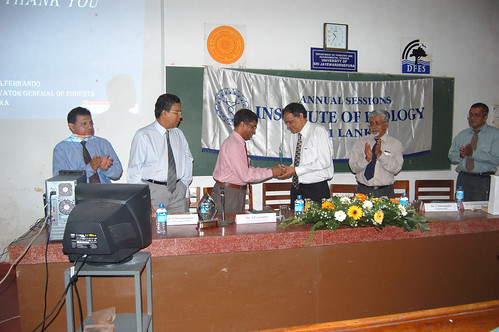
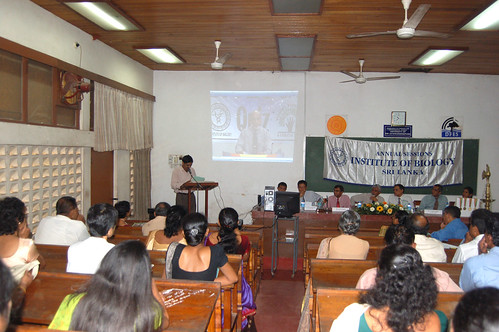
Annual Sessions of the Institute of Bology 2007

Annual Sessions 2007 was held at Department of Forestry and Environment Science, University of Sri Jayewardenpura.

Felicitation of Prof WD Ratnasooriya


Sessions in Progress:

Plantation Forestry in Sri Lanka: Challenges and Constraints

Presidential Address by Dr. S.M.C.U.P. Subasinghe
President, Institute of Biology
at Annual Sessions of the Institute of Biology, Sri Lanka, 2007 September


Introduction

At the beginning of the last century, Sri Lanka was a rich country in closed canopy natural forests which covered about 80% of the total land area. However, it has been dwindled up to just over 20% at present which has significanlty increased the awareness of the relevant authorities and the general public. Since the forests are organized assemblages of trees, other plants and animals, in complex association with each other and their physical environment, reduction of forest cover has directly and indirectly influenced on other sub-sectors such as agriculture, wood industry, wildlife etc.

The importance of the forest cover in the aspect of its contribution to the national economy was not clearly identified. In 1993, it has been calculated as 1.4% of the gross domestic product. Employment in the sector was estimated at about 170,000. However, since the use of forests for wood and non-wood products (both goods and services) at village or regional level was difficult to estimate and therefore the true contribution to the economy can however be much greater than the above figure.

Deforestation and causes

On a landscape scale, and over long periods of time, naturally developed forest communities result the greatest amount of biological diversity under the prevailing climatic and soil conditions in a given region. Therefore loosing the natural forest cover causes a severe impact of the existing biological diversity and other intangible uses. In 1995, the forestry sector master plan has identified the following results as the most serious consequences of deforestation and forest degradation.

i. biodiversity reduction,
ii. irregular water flow and drying up of natural streams,
iii. shortened lifespan of irrigation channels and reservoirs,
iv. soil erosion and associated loss of fertility,
v. increasing fuelwood scarcity, and
vi. contribution to the greenhouse gas emissions.

The depletion of forest resources is also closely linked to the demand for forest products such as timber, non-timber forest products and fuelwood. Population increase combined with economic growth has resulted in higher demand for housing and business construction, which has increased the demand for wood.

The poverty has been highlighted as one of the major causes of forest degradation because shifting cultivation, illicit felling and encroachment activities are believed to be results of the poverty. Moreover the government projects implemented in 1980 s such as Mahawely, Kirindioya, Pelawatta Sugarcane plantations and Sewanagala Sugarcane plantations contributed to the forest depletion in significant manner, i.e., between 1983 and 1992 the contribution of the above projects to the deforestation is 37%.

Depletion of the forest cover continues in the future even with a slower rate due to a high demand for timber, non-timber products and the land hunger for settlements and agriculture with the increasing population. The expanding population base and economic growth will increase the demand for roundwood and poles from about 2 million m3 in 1995 to 2.7 million m3 in 2020. During the same period, the need for biomass energy will increase from 9.3 million tonnes to 9.7 million tonnes. At the same time, the closed canopy natural forest cover is projected decline to about 17% in 2020.

Products and services

Other than the wood and non-wood production, the natural forests and forest plantations also provide other environmental services which are demanded by the people. The forestry sector is closely linked to the agriculture and energy sectors. As the population and economy grow, more electricity is needed. Hydropower is the main source of electricity. Therefore, maintenance of the forest cover has become a must to continue the sustainable productivity of the above sub-sectors.

However, the country's wood demand should also be addressed by utilizing the forest resources. Among the highly demanded forest products, sawntimebr, roundwood and fuelwood become more important. Although sawnwood consumption in Sri Lanka (31 m3 per 1000 persons in 1993) is lower than that of the other countries in Asia such as Malaysia, Thailand, it has been projected to be 0.885 million m3 in 2020, i.e. by about 12,600 m3 per year assuming that some substitution of other materials for sawnwood is taken place. According to the forestry sector master plan, the industrial roundwood requirement in 2005 was about 15.61 x 10⁵ m3 which is projected to be more by 4.62 x 10⁵ m3 in 2020,due to the growing demand arisen by the increasing population.

Per capita consumption of paper and paperboard consumption is also low in Sri Lanka when compared with the international figures. However, the demand for paper and paperboard is projected to reach 407,000 t in 2020 compared with 130,000 t in 1993. The average annual growth in total paper and paperboard demand is forecast to be 4.3% (9400 t). Per capita consumption in 2020 will be about 18 kg per year.

Although there are not proper statistics available on the non-wood forest product consumption, most of the population in Sri Lanka uses those products directly or indirectly. Among the mostly used products, medicinal plants, rattan, bamboo, kithul products and wildlife products are prominent.

Electricity and telephone poles are more important in terms of value than in terms of wood consumption. The long-term annual demand for wooden electricity poles is expected to stay at 20,000-25,000 pieces (about 3000 m3), in spite of extensive electrification schemes. However, there will be a very little demand for wooden telephone poles in the future.

The contribution of the natural forests to the bio-fuel supply is 7% which is 4% by the forest plantations. The country's bio-fuel requirement in 2020 will be 0.889 million m3. However, there might be a change of this figure in the future due to the increase of use of LP gas and electricity. Moreover, although Sri Lanka is self-sufficient in fuelwood supply as a country, there are fuelwood deficit regions such as Colombo, Matara, and Nuwara-Eliya. Therefore, unless a proper distribution system is introduced, use of fuelwood will also become a major problem.

Forest plantations

In order to address the timber and fuel-wood demand in the country, forest plantations were introduced as the alternatives. One of the other objectives formulated at present is that to address the issue on timber imports from the other countries such as Malaysia. Forest plantations were established for the first time in the 1870s, although most of the planting has taken place since the 1950s. Within that period, about 89,000 ha of forest plantations of varying quality have been established. This area comprises some 5000 ha of mainly fuelwood plantations, which were mainly under the control of tea estates and a tobacco company. In 2004, Sri Lanka Forest Department maintained 93,000 ha of plantations in the entire Island.

Forest plantations in Sri Lanka have mainly been established using exotic species due to their faster growth rates over the indigenous species. Although the history of introducing exotic timber species goes back to 1870s, most of the planting has taken place since the 1950s. The idea of this exercise was to have an alternative timber resource to protect the existing natural forest cover and to rehabilitate the environmentally damaged areas within a short period of time. At present the most favourable species for the plantation forestry are teak, eucalypts, pines, acacias and mahogany.

Although the primary aim of the establishment of forest plantations are to address the timber and fuel wood demand, there are other benefits which might be similar to some of the benefits that are obtained from the natural forests as given below. However, the biodiversity and some of the environmental values cannot be met in the forest plantations especially managed for the timber production. These benefits are:

i. increase of wood production,
ii. savings in the government expenditure,
iii. improvement of landuse,
iv. reduction of the pressure on the natural forests,
v. reduction of timber imports,
vi. increase of revenue for the state, and
vii. increase of rural incomes and employment.

Forest plantations under state control will have to provide a reasonable return to society in order to mark them as true production forests, and as the minimum, the benefits accruing to society should not be lower than the costs. Tree growing has to provide higher return than agriculture before a farmer is interested in investing in it, because of the longer production period and greater risks involved. Private sector investors always have investment alternatives, and wood production still has to demonstrate its potential as a viable investment in Sri Lanka.

The profitability of small scale plantations managed by farmers was assessed by assuming that the yields would be 20% less than in a large scale plantation. According to the financial analysis, small scale monoculture plantations would not be profitable for farmers. The real rates of return of all the selected species under normal site conditions were clearly below the indicative real rate of return (20%) that a farmer would acquire. However, the results do not mean that the small-scale forest plantations would not be established by the farmers under right conditions. When trees are planted on small scale or incorporated into the farming system, tree growing can be a profitable proposition, as is demonstrated by the dynamic home garden sub-sector that is providing wood for the industry, and valuable income and raw material to the farmers.

Involvement of private sector in plantation forestry

In order to increase the tree cover by means of forest plantations to address the earlier mentioned requirements, and to save the government funds for other necessities, the private sector participation for the establishment of forest plantations has been promoted. However, due to the longer duration that has to be waited to obtain the profits, until recent, investments in forestry sector was not popular among the private sector. However, almost all the major regional planting companies (i.e., tea and rubber) stepped forward initially and started planting timber species on their barren and abandoned lands in both upcountry and low country for the production of timber in addition to the already maintained fuelwood plantations. However, the view of the government was not only to focus the improvement of the existing plantations but also on involving the non-estate sector in the establishment and management of new plantations. At the same time the state has recognised the necessity of supporting policy, legislation and other support systems such as extension and access to financing are in place.

Management of forest plantations

Managed forests are generally less complex than natural forests because management typically attempts to optimize only a few species - usually those of high commercial value; those which are characterized by fast growth (high productivity); or those that can be grown in pure stands or in relatively simple mixtures.

Villages in forest concessions, timber harvesting, timber industry and population are closely linked. This means that sustainable forest use and agriculture are also closely linked. However, the private sector engaged in timber harvesting, timber industry, job creation cannot take care of agriculture. Agriculture is a completely different branch with a different approach and different expertise. To harmonise both - forestry and agriculture - government support is necessary, and governments need the support of donors in order to integrate forestry/agriculture in projects with research and education. However, it has been recognised that the private investors have to respect the existing laws and traditional rights especially at the harvesting period. Requests by the population for better regional infrastructure and road-building are followed by private companies when supported by government authorities and financially feasible.

Challenges in plantation forestry

The planetary ecosystem at present may have a minimum threshold of forest cover necessary to support a certain level of human habitation. Mostly, foresters assume that an existing, desirable forest cover type can be maintained by the same silvicultural treatment that was successful in another area or on another site. This, of course, may not be so if the two stands exist on significantly different site types or have resulted from different disturbances.

Furthermore, as emphasis in forest management changes from simply trying to grow the "best trees" on "the best sites" toward maintaining forests in a more natural condition while still utilizing the resources, it is becoming even more important that attention has to be paid to the physical environment that controls forest ecosystems. One of the reasons for this change may be due to the understanding of the environmental safeguards or due to the recognition of the importance of the requirement of the standards such as forest certification.

Forest certification has been introduced to promote the sustainable forest management with the protection of existing biodiversity. However, medium and small companies will not be able to cover the costs of certification because there is no guaranteed price increment for the certified timber at the world market at present. Moreover, the opportunity to export the Sri Lanka timber to the countries interested in certified products is low under the present government policy. This means that these markets have to bear certification costs alone or five times more than other markets not bearing those costs. In addition to higher production costs for improved sustainable forest management, the growers will have to bear quite important costs for certification.

Constraints in plantation management
Forest management is a complex exercise due to the web factors involved with it other than the economic, ecological and cultural aspects. There is also an involvement with the technical aspects, institutional rules, political influences which are decisive for the behavior of the user of natural resources in general and of the forest in particular. In constitutional states these limits and possibilities for owners and users are fixed in legal acts, such as constitutions, laws, decrees etc.

Among the major constraints faced in plantation forestry, the land availability, social issues, environmental issues, lack of scientific information and research become prominent. At the same time, the unforeseen catastrophes create significant problems by reducing the growth rate or destroying a part or the entire forest.

Availability of land

Land availability, sustainability and the profitability of plantation forestry are major issues if industrial plantations are to be established in new areas. Locating large new areas for forest plantation development will not be a very easy task. In the more productive wet zone and up country areas, competition for land is intense and the forest plantation sector cannot expect to acquire significant additional land unless they are taken from other uses. Availability of the suitable lands is the main constraint faced by the private sector investors at present. Mostly the available lands are infertile or abandoned after planting agricultural crops such as rubber. Obtaining a suitable land with a large extent is more problematic in the wet zone. In order to obtain a higher growth from infertile lands, most intensive management practices have to be applied which can increase the cost significantly. It will also take time to reach high quality productivity levels on such lands. The expected final harvest of the private forest plantations are much shorter than that of the Forest Department plantations and therefore more and more financial inputs may be necessary to uplift such plantation conditions.

Social and environmental impacts and risks

Management practices that are ecologically sound on a site or local ecosystem level may not address landscape and regional concerns. Although private owners are not obligated to consider regional ecological concerns (other than those specifically covered by law, e.g., harvesting of endangered species, harvesting on high slopes or sensitive areas), many of them are interested, and often eager, to accommodate them within limits of economic efficiency.

Environmental issues
Plantation forestry especially with even-aged monocultures is criticised in causing environmental degradation. The situation becomes more severe with the exotic species such as pines and eucalypts. With those plantations, the issues have emerged on degradation of the soil quality especially when they are planted on slopes. Lack of biodiversity in such forests is also common. Moreover, there are issues regarding the aesthetic values. The erosion problem becomes severe if the plantations are clear felled after reaching the maturity. Therefore the necessity of a system to protect the soil quality by using proper management schems is always highlighted.

Unforeseen catastrophes
Unforeseen catastrophes are common in forest plantations. In Sri Lanka the major damage is caused by the fire, diseases and pests. Teak in the dry zone and eucalypts in the up country are vulnerable for fire. Teak is commonly attacked by the defoliators and the skeletonizers at the nursery stage and very young stage in the field. However, mahogany is considered as the best example for vulnerable plantation species for the insect attack that can be caused by shoot borer called Hypsophylla.

Lack of scientific knowledge and research

This has become a serious issue for the private investors on plantation forestry. In order to make their plantations economically viable, the age for the final harvest for both mahogany and teak which are the preferred species by them, has been decided around 20 years which is significantly lower than the state plantations. Therefore, they have to use the most intensive management principles to achieve the expected growth within the given period. In order to facilitate these requirements, enough studies of growth rates, growth enhancement, site quality differences, and protective measures from pests and diseases are yet to be conducted.

Conclusion

Two things are clear concerning comprehensive and newly strengthened national programmes to sustain forests: they must be country-driven and country-initiated; and they will, in many countries, require new and more effective international support. Sustaining forests can best be achieved through a combination of national and international policy reforms, long-term plans to stabilize forest areas and industrial countries' commitment of greatly enhanced financial and technical support to developing countries.

The investor-institute partnership should be maintained in order to achieve the goals set in the plantation forest management and a flow of information from one sector to the other should be established. Moreover, partnership agreements could specify the actions to be taken by countries inside and outside the forest sector to address the underlying causes of deforestation and the support and actions to be undertaken by the international community.

Citation on Professor W D Ratnasooriya

Presented by Mrs. Dilrukshi de Silva, Head, Department of Zoology, University of Colombo. at Annual Sessions of the Institute of Biology, Sri Lanka on 2007 September

It is an honour and privilege for me to present to you, Professor Wanigasekera Daya Ratnasooriya for felicitation by the Institute of Biology, in recognition of his invaluable service to the field of Biology in Sri Lanka. Professor Ratnasooriya is no stranger to the Institute of Biology and to this audience. He was one of the founder secretaries of the Institute of Biology and served on its council in 1988/89.

Professor Ratnasooriya had his primary and secondary education at Royal College, Colombo. He gained admission to the University of Ceylon, Sri Lanka, in 1968 and graduated with a Second Class Honours in Zoology (Upper Division), in 1972. He then joined the Department of Zoology as an Assistant Lecturer in 1973 and proceeded to the University of Strathclyde in Glasgow, UK in 1975, from where he obtained his PhD in 1978. On his return to Sri Lanka, he was promoted to the post of Lecturer in 1979. He has the singular honour of becoming the youngest Professor of Zoology in Sri Lanka in 1986, at the age of thirty-eight, having earned a merit promotion directly from Lecturer, a rare achievement in those days. He was appointed to the Chair in Zoology two years later. He then earned another merit promotion to Senior Professor in Zoology in 1991. All this bears ample testimony to his meteoric rise in his chosen profession as a university academic and scientist.

I have known Professor Ratnasooriya over half my life, first as a senior student when I joined the university and then as a member of the academic staff of the Department of Zoology. Although I have not had the good fortune of being taught by him, I am told by several of his students, some of whom are now members of the department, that he is an excellent teacher who has the gift of being able to convey complex physiology in a simple manner that could be easily understood by students.

Research has always been of great interest and importance to Professor Ratnasooriya and that is his forte. Since his return to the Department of Zoology after obtaining his PhD, he has become one of the foremost researchers in Sri Lanka. His research interests are wide and varied, ranging from mammalian reproductive physiology, biology of the Sri Lankan elephant, ecology & biology of bats in Sri Lanka to pharmacological & toxicological studies on Sri Lankan plants and bioactivity of Sri Lankan tea. It is remarkable that almost all of this research work has been done in Sri Lanka, with limited facilities, having being funded mainly by local funding agencies such as the National Science Foundation. I believe that there is no other zoologist in Sri Lanka who has published his research work as much as Professor Ratnasooriya. He has to his credit 253 research publications in peer reviewed prestigious local and international journals, many of which are indexed in international data bases such as Science Citation Index and Current Contents. He has the rare distinction of being the Sri Lankan Scientist having the highest individual cumulative index for research publications for the period 1991-2001, cited in the Science Citation Index, according to the report of the National Research Council of Sri Lanka. .In addition he has 139 research communications presented at national and international conferences.

In recognition of his outstanding achievements as a researcher and scientist he has received many awards. These include the Presidential Bonus Research Award for International Scientific Publications cited in World Science Citation Index in 1999, 2000, 2002 , 2006 and 2007 , the CVCD Excellence Award for the most outstanding researcher in Biological Sciences in 2006, the Sri Lanka Association for the Advancement of Science, General Research Committee Award for outstanding contribution to scientific research in Sri Lanka in 2005, the Research Achievement Award from the University Grants Commission for Excellence in research based on publications in indexed journals in 2004, merit awards three times from the National Science Foundation, Sri Lanka, in 1988,1991 and 1993) and the Annual Research Award for the best research scientist in the Faculty of Science, University of Colombo over the past six consecutive years , from 2001 - 2006. He was elected a Fellow of the Third World Academy of Sciences (TWAS) in 2005 and is a Fellow of the National Academy of Sciences, Sri Lanka and a Fellow and Chartered Biologist, Institute of Biology, Sri Lanka. Professor Ratnasooriya has now reached the pinnacle of his distinguished and outstanding career as a scientist having earned the Doctor of Science degree from the University of Peradeniya this year. In spite of all these achievements, he still remains the quiet, soft spoken and unassuming person that he always was.

Professor Ratnasooriya has also made numerous and valuable contributions, both at university and national level, in the field of Biology. He served as Head of the Department of Zoology, University of Colombo from 1987 to 2002 and served in various committees within and outside the university. He has several research students working under his supervision and so far, 5 M.Sc., 8 M.Phil. and 6 PhD degrees have been awarded to them. He has served as External Examiner and Visiting Lecturer to several other universities in Sri Lanka and functioned as member of the editorial boards and as referee of several scientific journals both nationally & internationally.

His contribution to the GCE Advanced Level in Zoology in the past and now in Biology is invaluable. He has authored several text books in Zoology and served as member of syllabus and curriculum revision committees in Zoology for the G.C.E Advanced Level. He has been a member of the Setting Board of Zoology and is at present a member of the setting Board of Biology. He functioned as the Co-controlling Chief Examiner in Zoology from 1988 to 1993, Controlling Chief Examiner in Zoology from 1994-2000 and is presently one of the three Co-controlling Chief Examiners of Biology.

In recognition of his long, dedicated and scholarly service to the advancement of biology and research in Sri Lanka, the Institute of Biology is honoured to felicitate Professor W.D. Ratnasooriya, its founder secretary and Senior Professor of Zoology at the University of Colombo.

Monday, March 27, 2006

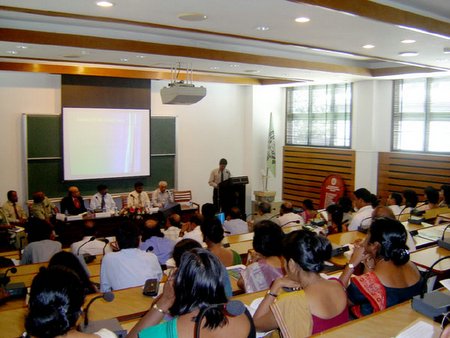
Annual Sessions of Institute of Biology, 2006

Annual Sessons at Auditorium of the National Institute of Education, Maharagama  Posted by Picasa

Wednesday, March 22, 2006

Biology for eco-friendly development

Dr. Hiran S Amarasekera
Department of Forestry and Environmental Science
, University of Sri Jayewardenepura, Nugegoda
President , Insititue of Biology, 1996- 1997

Sri Lanka is in the process of achieving rapid development in line with the other industrialist nations. The theme, “biology for eco-friendly development” was selected to stress the importance of achieving this development by formulating correct strategies to provide goods and services to satisfy the highly competitive, rapidly expanding market demand on the one hand and protecting natural ecosystems on the other. We are fortunate to have kind sponsorship from the Ministry of Forestry and Environment which will broaden our capabilities to serve Sri Lankan population at large in communicating this message of Biology for eco-friendly development. 

Developing country like Sri Lanka, on average, is far behind the other developed nations in welfare of rural population, equity and national economic development. Hence we must concentrate on eco-friendly utilization of natural resources to enhance welfare of rural population and national economic development with due attention to equity.  This development should be accompanied with conserving renewable resources such as soil, water and forest resources, controlling pollution, reducing waste and developing eco-friendly technologies.


Biology is the scientific study of living things. From the traditional division into zoology and botany, biosciences have developed which span their limits.  Disciplines such as micorbiology, biotechnology, forestry, horticulture, agriculture, fisheries, oceanography, marine biology, biochemistry, palaeontology and medicine have a strong basis in biology.  Biology has the potential to help solve many of the current problems, a number of which stem from overpopulation and the strain that our sheer numbers place on ecological systems. Because of the population growth, human beings are now exhausting the limited resources that support the life on our small planet.

Biologists have identified and defined these valuable resources as bio-diversity. Biological diversity or Biodiversity refers to the variety of life forms: the different plants, animals and micro-organisms, the genes they contain, and the ecosystems they form. This living wealth is the product of hundreds of millions of years of evolutionary history. Humanity derives all of its food and many medicines and industrial products from the wild and domesticated components of biological diversity. Biotic resources also  provide many ecological services. As Sri Lanka has been identified as one of the biodiverstiy hot spots in the world it is essential to contribute to the conservation and management efforts of these biological resources.

Several biologists are now involved in forestry. Forestry sector has economic linkages to the energy sector by providing bio-energy (fuelwood) and protection of catchment areas serving hydropower generation. Forestry also contribute indirectly to agriculture sector by conserving soil and water. It provides industry sector with the much needed supply of wood and other forest based raw materials.  Although, official statistics indicate that forestry sector provides 1.4% to the GNP (in 1993), the true contribution to the economy by this sector is much greater.  Forestry also provides other tangible and intangible benefits.

In the area of biotechnology, biologists are now applying discoveries in biology to eco-friendly production of useful organisms and their products. It centers on development of enzyme technology in industry and medicine, and of gene manipulation, often utilized in plant and animal breeding.  Together, these constitute biomolecular engineering.  Branches include fermentation technology, waste technology and renewable resources technology, such as the use of lignocellulose to generate more usable energy sources.  Micro-organisms, and their traditional involvement in brewing, baking and cheese/ yogurt industries is also affected by the technology.

Sri Lankan biologists have contributed immensely in conserving natural resources, particularly natural wet-zone forests.  Botanists and zoologists have conducted detailed studies on the biodiversity of Sri Lanka, which helped the world community to understand the biological importance of this island. However only very limited amount of research have been conducted on management and sustainable utilization in forestry and in many other natural resource disciplines. Also we are experiencing the pressure from certain environmentalists who are lobbying on extreme preservation measures thus hindering development activities.  The issues such as carbon dioxide emissions, stratospheric ozone depletion, the disposal of toxic wastes, although important to Sri Lanka are not our own priorities.  We should be more concerned on problems such as soil erosion, the depletion of wood supplies to the industry, inadequate and poor water supply, and bad sanitation. Our limited research resources among biologists and other disciplines should be channeled towards addressing these pressing concerns, rather than towards “global modeling”. In this area, as biologists and scientists we have a major role in educating young students, NGO community and the general public at large. 

It is essential to concentrate our efforts on dissemination and development of knowledge in the fields of management and eco-friendly utilization of biological resources to achieve the economic development.

Presidential Address, at the Theme Seminar on Biology for Eco-friendly development at the Seventeenth Annual Sessions of the Institute of Biology, Sri Lanka, 1997

Structure of School Biology Education in Sri Lanka

C. M. R. Anthony
Director, National Institue of Education, Maharagama
President, Institute of Biology, 2004-2005

In many countries including Sri Lanka, there is usually a single centralized curriculum designed for children alike with a view to avoid discrimination and provide equality of opportunity. Within this curriculum, biology is rarely taught as a distinct subject at the primary (grades 1-5) and lower secondary (grades 6-9) levels. Instead, it is usually offered as a part of environmental or nature study at the former (environment related activities in Sri Lanka), and as integrated science at the latter stage. It is only at the higher secondary (grades10-13) stage that we find biology as a well-established school curricular discipline in most educational systems with public and institutional support. Science as part of general education has always been viewed as a subject of life-long utility in school curricula. Recently, the trend in many countries has been to switch to environmental studies with curricular content based mainly on three clusters: living things, matter and energy, and earth and universe.

Proposed curriculum reforms to be implemented in 2007 provide opportunity for the children reaching grade 10 to take Biology as a subject. Biology, by virtue of its usefulness in everyday life and in socio-cultural change, forms an integral component of almost all school science courses.

Biodiversity as a unit in GCE Advanced Level curriculum

Biodiversity has been introduced as a separate course unit for Biology subject for GCE AL curriculum.
This was a replacement for Plant and Animal diversity in the earlier curricula of Botany and Zoology.
This unit focuses on the following topics:
What is Biodiversity
Classification and Nomenclature
Why study biodiversity?
Evolution of biodiversity      
Extinction of biodiversity
Conservation of biodiversity (in-situ and ex-situ conservation)
Role of taxonomists

Message of the chief guest of the 2003 Annual Sessions of IOB

Rohan Pethiyagoda 27 September 2003
Adviser/ Ministry of Environment & Natural Resources

23rd ANNUAL SESSIONS -2003, INSTITUTE OF BIOLOGY
SRI LANKA

MESSAGE OF THE CHIEF GUEST

I am deeply honoured by the invitation extended to me by the Council of the Institute of Biology to be present at its 2003 Annual Sessions. As an engineer by training, it is perhaps unusual that in my own case, the study of biology has grown from a boyhood hobby to a full-time obsession. Despite my status as an ‘outsider’ among professional biologists, I have been greatly touched by the readiness with which they have welcomed me into their ranks.

In the two decades since the Institute was established, biology has developed from being largely an academic ‘pure’ science into an industrial mainstay: the biological sciences today represent greater market capitalization than the computer sciences. The prestigious Nature group of journals for example, devotes four of its eight periodicals purely to the ‘new biology’— Cell Biology, Structural Biology, Genetics and Biotechnology. The Nobel Prize for Medicine or Physiology has, during the past several decades, been awarded increasingly not to medical researchers but to cell and molecular biologists.

The challenge before professional biologists in Sri Lanka today is developing institutional capacity in the front-line biological sciences while reinforcing the foundations of traditional biology. It is time not just to change the national perception that all biologists are either ‘botanists’ or ‘zoologists’, but also to demonstrate that inasmuch as the past half-century belonged to the electronics industry, the next must belong to the genomics and proteomics industry. These are enormous challenges that demand visionary thinking and courageous initiatives, to both of which challenges I am sure the Institute and its members are equal.

At the same time, biologists face increasing challenges in fields of immediate and urgent relevance to Sri Lanka. Conservation biology is taught and researched, but hardly practised; likewise, opportunities in traditional fields such as ecology, systematics, behavioural science and bioinformatics need to be developed and exploited fully in the national interest by the community of biologists.

I extend to the Council and members of the Institute my sincere good wishes on their nineteenth year of service to the nation and to biology. Be assured that the future belongs to you.

Rohan Pethiyagoda 27 September 2003
Adviser/ Ministry of Environment & Natural Resources
"Sampathpaya", Battaramulla, Sri Lanka.

Issues Faced by the Wood Working Industry in Sri Lanka

Presently major part of the wood working industry is owned by private sector. Many studies carried out in the past have revealed, that most of the wood based industries were based on traditional technology, using out dated equipment. It was further revealed that most  of the personnel engaged in the industries were inadequately trained and did not have the technical competence to perform  relevant activities. This has resulted in  high losses in conversion, in this industry. It is also necessary to have more value addition for various products. The industry has been in the state of underdevelopment for over a period of 20 years and as a result have lost touch with the new trends in the industry, new technology etc. It is interesting to note that there is no single state agency responsible for providing the necessary support, skills; both technical and managerial for upgrading the wood working industry in the country. Various agencies are dealing with aspects relating to wood working industry, but is not geared towards providing most of the support required for developing the industry. 

Moratuwa is considered as the prime location for the wood working industry in the country. However, the industry has been on the decline over the past two decades which has had serious impact on the economic setting of the area and on the livelihood of the people dependent on the industry. It is estimated that there are over 10,000 people employed in the wood working industry in Moratuwa alone. The wood working industry in Moratuwa consists mainly of furniture. In order to be competitive in the domestic as well as in the international market the industry has to produce outputs of high quality, including superior finish and good designing. However, the industry lacks the know how and skills for quality production, the necessary technology or equipment for such production and also to produce designs to cater for the current market demand.

Much discussion have taken place over the years where the need for upgrading the wood working industry has been emphasized, but very little initiatives have been made while the industry is slowly being destroyed. This situating cannot continue any further.

Tuesday, March 21, 2006

Post articles on Biology

This is official blogging site of Insititue of Biology, Sri Lanka. Please post your articles, thoughts on Biology and related fields.

Dr Hiran Amarasekera